
When I started using peptides 20 years ago, almost nobody on the planet knew the word even existed.
There were very few forum threads or podcasts talking about them.
It was me, a stack of research I had to dig out of obscure Eastern European journals, and a willingness to be my own test subject.
Fast forward to today, where peptides are the hottest topic in every wellness clinic in America.
Anything resembling a new “peptide certification” seems to provide little more than dosing chart and have the galls to call itself a “credential.”
But anyone with two brain cells can find a dosing chart in four seconds on Reddit (even if it’s the farthest thing away from being effective or safe).
What’s harder to find is someone who understands WHY a peptide works and WHEN it belongs in a health optimization protocol.
That same person also understands what has to be fixed before a peptide can even be useful, along how to monitor biofeedback after someone starts using peptides.
I’ve watched a flood of coaches and clinicians rush to get “certified” through programs that never taught them to think.
Today, I AM putting a stop to the flood once and for all.
And the way I’m going to do so is by laying out exactly what a real peptide certification should teach.
By the time you’re finished reading, you’ll be able to spot the truly valuable programs from the fake ones before you invest your limited time and valuable reputation into any of them.
Quick Takeaways
- There is no government-issued peptide license; therefore, a peptide certification is a private credential whose value depends entirely on its rigor.
- A real program teaches mechanisms and decision-making, going above and beyond providing you with a generic list of compounds and doses.
- Peptides underperform on a broken hormonal foundation, which makes endocrine physiology and lab interpretation non-negotiable parts of any solid curriculum.
- Women often need sex-specific protocols, cycle-aware dosing, different cycling schedules than men, and other gender-specific adjustments
- Coaches and clinicians use the same knowledge differently; that means a coach’s scope of practice has to be laid out explicitly (and separately from that of the physician).
- Peptides work best inside a complete optimization framework, rather than as a standalone specialty.

What Is a Peptide Certification?
A peptide certification is a training credential that verifies a coach, trainer, clinician, or influencer understands how therapeutic peptides function and how they are integrated into client protocols.
Ideally, it will also inform students on how outcomes should be monitored.
It is NOT a license to prescribe peptides to clients!
No federal agency or state board will issue you a “peptide license.”
Physicians, nurse practitioners, and physician assistants are able to prescribe but they do so under their existing medical licenses.
A coach’s job is to educate and support clients with integrating peptides into their overall program.
That makes every peptide certification on the market a private credential, and the only thing that gives a certification of this sort any weight is what you were required to learn what you have to prove in order to earn it.

Why Peptide Education Became Urgent
Peptides are one of the fastest-moving categories in medicine.
A 2022 review in Signal Transduction and Targeted Therapy noted that peptide drug development has made great progress over the last decade across production, modification, delivery, safety, and effectiveness.
Then the GLP-1 peptides arrived and accelerated the curves of development and market awareness.
Semaglutide, Tirzepatide, and Retatrutide put the subject of peptides in front of tens of millions of people who had never heard the word before.
People are now walking into gyms, clinics, and coaching practices asking about the entire spectrum of therapeutic peptides: BPC-157, TB-500, Ipamorelin, Semax, PT-141, Kisspeptin, and many more.
And as much as the overwhelming majority of physicians received zero formal education on therapeutic peptides in medical school… I’ll be the first to tell you that the overwhelming majority of coaches have received even less.
Ironically, this means the client is often more informed than the professional they’re paying good money to.
And that gap in experience and knowledge is a liability for everyone involved.

The Problem With Most Peptide Courses
I’ve reviewed a lot of peptide training over the years.
Most of them fall into one of two traps.
Trap #1 is the compound encyclopedia.
You get bombarded with hundreds of slides, dozens of compounds, and several dosing charts.
Maybe you leave having memorized all that information, but you’re clueless about making the right choice for your client.
Trap #2 is the protocol cookbook.
Every goal gets a generic stack: One for fat loss, one for building muscle, one for healing and recovery, and so on.
Here’s what the cookbook can’t do for you…
- It won’t take blood work into account
- It won’t factor in your hormonal health
- It won’t consider vital differences in sex when it comes to physiology
- It won’t look at whether the client’s sleep, nutrition, and training can even support the protocol
Both traps produce the same result: Professionals who can regurgitate information but can’t reason their way out of a paper bag.

What a Real Comprehensive Certification Should Teach
Here is the curriculum I would demand from any truly comprehensive coaching training course before I put my name behind it or recommend it to any of my clients.
Peptides are ONE PART of a comprehensive health protocol.
Understanding human physiology, the coaching process, and all the other components of health optimization is mission-critical for a successful transformation.
1. Mechanism Before Compound
Peptides are signaling molecules that bind to receptors and “tell” cells what to do.
A professional who understands basic pharmacology (receptor targets, half-lives, downstream signaling, off-target interactions, etc.) can evaluate a brand-new compound and tell you whether you should try it or trash it on day one.
A professional who memorized a chart is going to find themselves paralyzed the moment something new hits the market.
Take BPC-157 as an example: Understanding that it upregulates growth hormone receptors in tendon fibroblasts tells you far more about where it fits into someone’s protocol than any generic dosing recommendation ever will.
2. The Biology of Repair Underneath Every Protocol
Recovery peptides amplify repair processes that already exist.
Understanding inflammation, autophagy, tissue remodeling, and the nervous system’s role in recovery is key to knowing exactly what it is you’re amplifying when you add a peptide to a client’s protocol.
That’s why I tell people to start thinking about TB-500 and BPC-157 as accelerants to an existing protocol involving physical rehabilitation and adequate rest.
3. The Hormonal Foundation
This is where most courses fail completely.
Every peptide in the world will underperform on a broken endocrine system.
That means a 45-year-old man running a growth hormone secretagogue at the same time as therapeutic testosterone in the basement is building on a soon-to-collapse house of cards.
In Living Leaner Longer Stronger, I divide the step-by-step optimization process into three layers: the foundation first, the hormonal control system second, and the precision layer of peptides last.
Every peptide is an amplifier by their very nature, but you cannot amplify a conversation your cells aren’t having.
A real certification teaches endocrine physiology, hormone panel interpretation, how to sequence hormonal optimization, and the lifestyle factors supporting a healthy hormonal foundation… BEFORE layering in peptides.
4. Lab Interpretation and Monitoring
If you can’t read a lab panel, you won’t be able to run a responsible peptide protocol.
Ipamorelin was the first truly selective growth hormone (GH) secretagogue, driving GH release without spiking cortisol.
Stacking multiple GH-elevating compounds like Ipamorelin and CJC-1295 together can push the output even higher, but doing so without tracking IGF-1 is no different guesswork.
A certification worth your money will teach you which markers to track and how often to retest them.
And if it’s REALLY worth the investment, you’ll be taught how to read results against optimal ranges instead than the drifting “normal” ranges most labs spit out.
5. Protocol Architecture: Sequencing, Stacking, and Cycling
Knowing compounds is one thing, but being able to combine and sequence them is the actual skill.
On my Peptide Cheat Sheet, the standard cycling protocol for peptides is 8 weeks on and 8 weeks off for men, and 8 weeks on and 4 weeks off for women (obviously there are exceptions depending on the peptide(s) in question).
The reasoning behind those cycles, and when to deviate from them, is what separates a protocol architect from someone copying a chart.
You have to add ONE compound at a time, because changing five variables at once means you’ll learn nothing about what any of them did.
6. Women’s Protocols as a Separate Discipline
Women are not smaller men.
Cycle timing changes how labs should be drawn and read.
Monica’s protocols for women differ from mine on dosing frequency and cycling, and several compounds play distinct roles in female physiology, especially when you’re talking about any of the best peptides for women over 40.
For example: PT-141 works on melanocortin receptors in the brain to restore desire at its source rather than forcing blood flow, and it improved sexual desire across two large trials in premenopausal women.
Therefore, any peptide certification that relegates women to a footnote is outdated.
7. Quality and Purity Literacy
The peptide market is full of underdosed and contaminated product that often gets mislabeled with the wrong compound and/or dose.
As I explain in Living Leaner Longer Stronger, some suppliers provide traceable batch and lot numbers with certificates of authenticity, while others don’t.
A real program teaches professionals how to evaluate peptide quality and what legitmate third-party testing documentation should look like.
It should go without saying that cutting corners here puts clients at risk, but you have to know what those corners are ahead of time.
8. Scope of Practice and Regulatory Literacy
Coaches must know exactly where their role starts and ends.
Clinicians need to understand they are operating in a FDA-guided landscape that keeps trying to restrict access to these compounds, which is why I co-founded SavePeptides.org.
A certification that ignores regulation leaves you exposed, while a certification that teaches you its inner workings lets you operate with confidence.
9. The Coaching Craft
The most elegant peptide protocol in the world WILL FAIL if the client misses half their doses, skips their labs, keeps sleeping five hours a night, and doesn’t check in with you at regular intervals.
Communication, accountability, support, and behavior change are soft skills that the coach and/or clinician is responsible for mastering.

Coaches vs. Clinicians: How Each Uses Peptide Training
The same knowledge serves two different roles in different ways.
| Coaches | Clinicians | |
| Prescribe peptides | No | Yes, under their license |
| Educate clients on mechanisms | Yes | Yes |
| Interpret labs in context of goals | Yes | Yes |
| Build training, nutrition, recovery around the protocol | Yes, a core strength | Rarely has time |
| Daily accountability and adherence | Yes, a core strength | Rarely has time |
| Order and act on medical tests | Act | Order/Act |
The best outcomes I’ve seen always come from a peptide-literate physician and a peptide-literate coach working together to serve the same client.

Red Flags in Any Peptide Course
Walk away if you see any of these:
- The entire curriculum is a compound list: No mechanisms, no labs, no sequencing, and no further education beyond the list.
- There is no assessment beyond a short multiple-choice quiz, so nobody ever checks whether you can apply what you learned.
- Women get one lesson, or none at all.
- The program implies a coach can prescribe or diagnose, which will end up being a massive legal and financial liability in the long run.

How the Performance Optimization Certification Handles Peptides
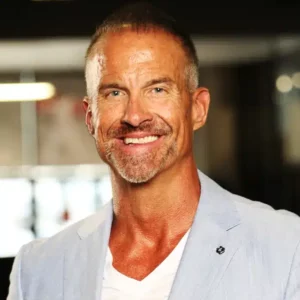
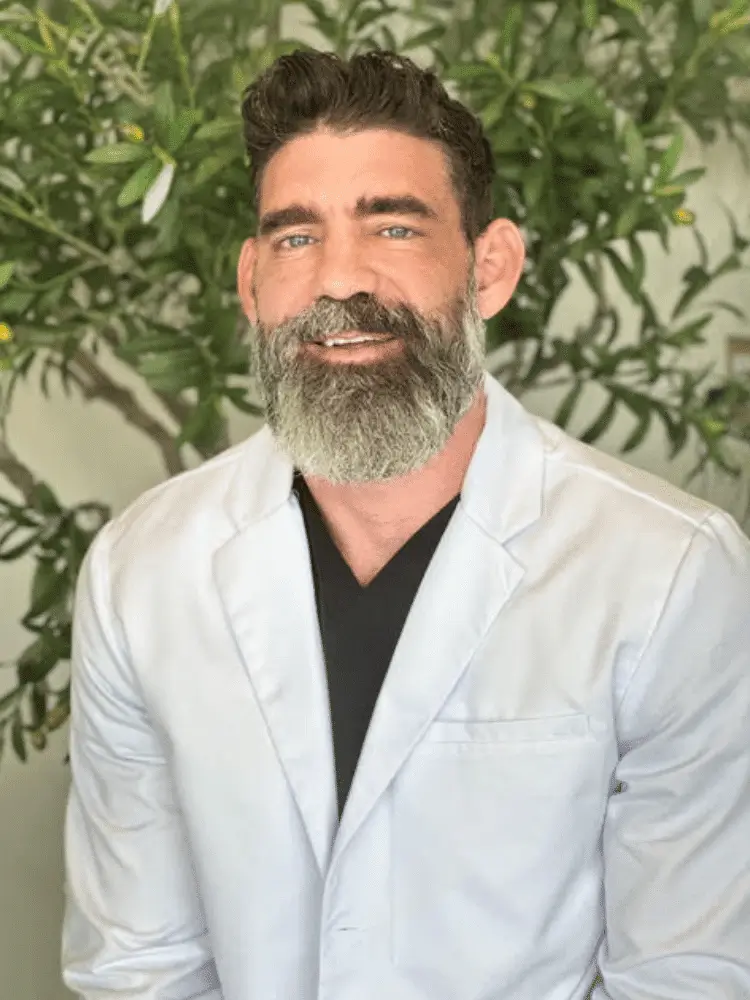
When Chris Zant and I built the Performance Optimization Certification Program, we made a deliberate choice.
Peptides sit inside a 15-module operating system, because that’s how they work in the real world.
Module 4, The Peptide Operating System, covers how therapeutic peptides function and how to integrate them into client protocols.
But outside of this module, you’ll also learn about the following within the remaining 14 modules:
- The biology of repair
- Hormonal architecture
- Lab interpretation
- Training
- Nutrition
- Immune resilience
- Nervous system mastery
- Sexual vitality
- Performance optimization for women
- Being an effective coach
- Protocol architecture.
Every module ends with a 20-question assessment and a written client case study.
The Professional tier finishes with proctored case studies and a final exam drawn from more than 350 questions.
Graduates who successfully complete these assessments will earn the Certified Performance Optimization Coach credential.
The Consumer tier delivers the full course with multiple-choice assessments and a Certificate of Completion, and was built for biohackers optimizing themselves.
Chris has spent 30 years making complex systems teachable and mentored directly under me for three years before building this program.
My wife Monica teaches the inner game, because an unexamined life will not benefit from the world’s best biohacking protocol.
The program launches November 3, and you can learn more about it here.

Peptide Certification FAQ
Is there an official peptide certification?
No government agency issues an official peptide certification or license.
Every peptide certification is a private credential, which means its value depends solely on the depth of the curriculum and the rigor of the assessments undertaken by the student (if any).
Can a health coach recommend peptides?
A health coach can educate clients about how peptides work and support them through a protocol.
A coach does not prescribe peptides, as prescribing falls under a licensed prescriber’s authority (doctor, nurse, etc.).
Do you need a medical license to take a peptide therapy certification?
No.
Coaches, trainers, clinician owners and select staff members can complete peptide training.
A licensed clinician can apply the same knowledge within their prescribing authority.
What should a peptide course cover?
At a bare minimum:
- Peptide mechanisms
- Repair biology
- Hormonal foundations
- Lab interpretation
- Protocol sequencing and cycling
- Women’s protocols
- Quality and purity evaluation
- Scope of practice
- Coaching skills
Does peptide training cover nootropic peptides like Semax and Selank?
A complete program would ideally mention them at the very least.
After all, cognition-enhancing and nervous system repair peptides like Semax and Selank are some of the most requested compounds in coaching practices today.
As it stands right now, peptides are the tip of the spear in human optimization.
The professionals who truly understand them will define the next decade of this industry.
Isn’t It Time You Became Fully Optimized To Live Leaner, Longer And Stronger?
Join my #1 online membership group, Fully Optimized Health to receive guidance from me and an elite group of more than 800 male and female biohackers (who all started out just like you).
And don’t forget to check out our other premium educational content dedicated to helping you fully optimize your health:
Live Leaner, Longer, Stronger: The 2026 God Stack Masterclass: the exact stack I run today, from therapeutic testosterone and FLGR242 to α-Klotho and retatrutide. Five compounds, 26 years of self-experimentation, zero theory.
The Ultimate GLP-1 Video Masterclass: how to PROPERLY use the world’s most powerful fat loss drugs to lose fat, keep your muscle, and improve your longevity.
The Positive Muscle Failure Video Training Method: three filmed full-body workouts with Monica and me that teach you to train to failure, not to exhaustion, for maximum muscle in minimum time.
Monica Campbell’s Ultimate 3-Day Training Program: my wife Monica’s full-body program for women ready to build real strength, sculpt lean muscle, and train with intensity.
The 30 Days 2 Shredz Video Masterclass: reprogram your mind and metabolism to torch fat with our Optimized Fasting Protocol, without the hunger and willpower battles.
Raise Your Vibration: the dimension of health that biohacking always misses. Monica and I walk you through the five pillars of a high-frequency life, grounded in the data.
See you on the inside!
[Disclaimer: This article is for educational purposes only. It does not constitute medical advice, diagnosis, or treatment. Always consult a qualified healthcare professional before beginning any peptide or hormonal protocol.]