
When I started optimizing my hormones more than two decades ago, the professional assistance that would have saved me years of wasted effort didn’t exist yet.
The doctors I saw could order labs, but they read them against reference ranges built to catch disease.
It would have been many more y ears before I finally realized those same ranges can’t be used to optimize a healthy human being.
The pro bodybuilders I learned to train from, men like Markus Reinhardt, knew how to build muscle better than anyone alive… but none of them were reading thyroid panels
And when I started using peptides in 2003, the only roadmap available was a stack of obscure Eastern European journals and my own willingness to be the test subject.
I had no choice but to become my own self-directed performance coach: Training, nutrition, mindset, recovery, peptides and hormones were all 100% my responsibility to learn and master.
It took me DECADES of trial and error to become the type of skilled performance coach can now fix a client’s problems in a matter of months if not weeks.
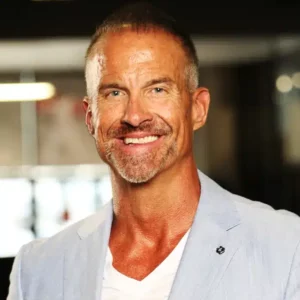
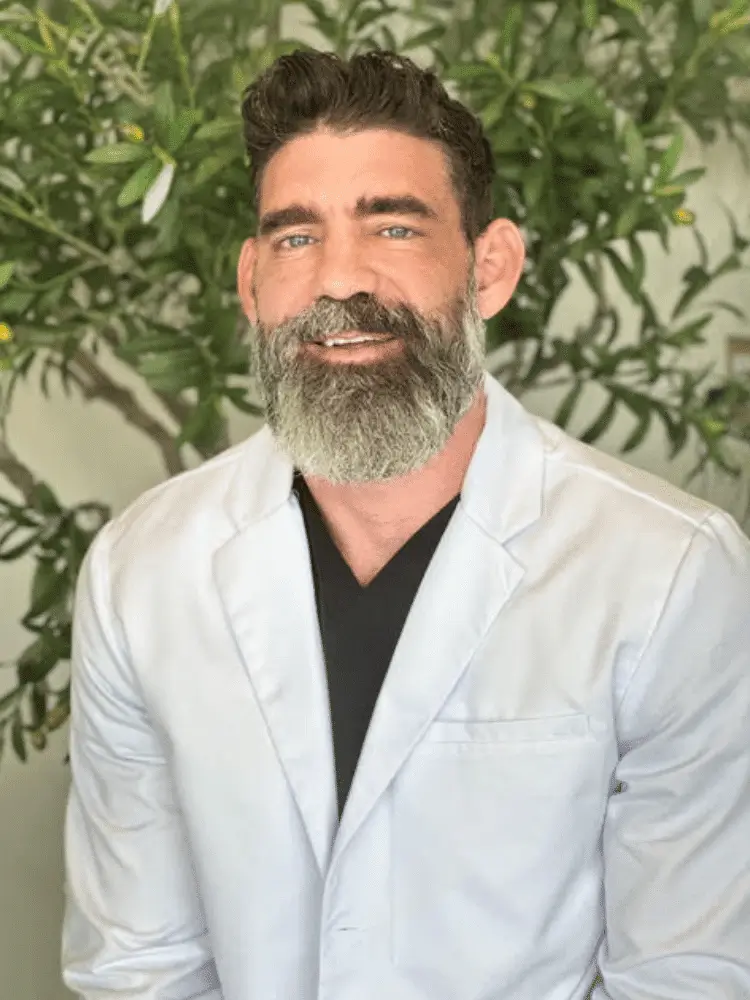
That’s why I believe performance coaching is the most important role emerging in health today, and why Chris Zant and I named our certification after it.
Quick Takeaways
- A performance coach integrates training, nutrition, hormones, peptides, recovery, and mindset into one data-driven plan.
- Personal trainers, nutritionists, physiotherapists, and health coaches each own one domain; a performance coach takes the bird’s-eye view and looks at how the domains interact.
- Lab interpretation is a lifelong skill in and of itself; you can’t optimize what you don’t measure, and “normal” is NOT optimal.
- Cardiorespiratory fitness and muscle strength are two of the strongest predictors of how long and how well you’ll live.
- Performance coaches can work in any location: Gyms, clinics, medical practices, corporate wellness, longevity consulting, and their own practices.
- There is no state license or formal label for performance coaching because the “certification” is your credibility and your ability to deliver results.

What Is a Performance Coach?
A performance coach is a professional who improves how a client’s body, spirit and mind function.
They do so by integrating training, nutrition, hormone health, peptides, recovery, and mindset into a holistic framework.
A framework guided by measurable data such as lab work and your body composition.
A traditional coach will emphasize isolated concepts to the extent they have studied, experienced and applied them.
Whereas a performance coach goes one step further by taking a full-spectrum approach to the entire biological operating system with the ultimate end goal of increasing longevity.
This may entail fixing multiple domains at once: Energy, strength, body composition, cognition, recovery, resilience, and long-term healthspan.
But allow me to be clear about the difference between a performance coach and a physician: The former is NOT meant to replace the latter!
A performance coach is the person who turns the physician’s guidance, lab results, quantitative and qualitative measures from the client, and nutrition, supplements, and diet into a daily plan the client can actually execute.
Their job matters because the sick-care system reads your labs against ranges designed to flag disease.
In 2017, LabCorp dropped the bottom of its “normal” total testosterone range to 264 ng/dL after adopting a harmonized four-cohort study.
Practically speaking, this means a 30-year-old man with the hormones of a geriatric is now told he is functioning normally.
A performance coach knows normal is nowhere near equivalent to optimal, and coaches the client to own their data instead of waiting for permission from a white lab coat.

Performance Coach vs. Personal Trainer vs. Health Coach vs. Nutritionist
These titles overlap, but the scope of each one is very different.
| Role | Primary Focus | Uses Lab Data | Covers Hormones and Peptides | Integrates Recovery and Mindset |
|---|---|---|---|---|
| Personal Trainer | Exercise programming and form | Rarely | No | Sometimes |
| Nutritionist | Diet and food choices | Sometimes | Rarely | Rarely |
| Health Coach | Habits and behavior change | Sometimes | Rarely | Yes |
| Performance Coach | The whole operating system | Yes, centrally | Yes | Yes |
A personal trainer asks, “What should this person do in the gym?”
A performance coach asks, “Why is this person’s recovery stalled? What do their labs, sleep, training load, nutrition, and stress tell me about it?”
Ask a better question and you get a far more useful answer.

What a Performance Coach Actually Does
On any given week, a performance coach is performing the following functions:
- Reviewing a client’s lab panel against optimal ranges (including markers like free and total testosterone, thyroid, and inflammatory markers)
- Building or adjusting a training program around goals, muscle preservation, conditioning, and recovery capacity
- Designing nutrition that supports the client’s training and body composition goals without negatively impacting hormonal health.
- Educating the client on the peptides and hormone therapies in their protocol so they can execute with precision.
- Tracking sleep, HRV, stress load, and other relevant biomarkers to decide when to push and when to pull back.
- Mindset coaching: Adherence, identity, self-worth, and the patterns that sabotage progress.
- Coordinating with the client’s physician (where possible) so the plan and the prescriptions point in the same direction.
That’s a lot of moving parts, which explains why clients who work with a skilled performance coach get results they were never able to get from a specialist.

Why Training Sits at the Center of Performance Coaching
If you want to know whether someone will live a long and capable life, their fitness level will tell you everything you need to know.
A study of more than 122,000 patients published in JAMA Network Open found people with the lowest cardiorespiratory fitness had roughly five times the mortality risk of elite performers.
Furthermore, there was no upper limit to the benefit of being fitter.
As I lay out in my newest book Living Leaner Longer Stronger, climbing up by just one fitness tier cuts your risk of dying from any cause more than quitting smoking does.
Strength — not size — is the other half of the longevity equation.
A 2022 meta-analysis in the British Journal of Sports Medicine linked muscle-strengthening activities to a 10%-17% lower risk of death from all causes.
The PURE study, which tracked roughly 140,000 adults across 17 countries, found grip strength predicted death from any cause more strongly than systolic blood pressure did.
As I’ve said before, grip strength testing is one of the cheapest and most brutally honest audits a coach can run.
Your muscle is your metabolic hardware, the single largest glucose disposal site in your body that also makes up the infrastructure running your hormone signaling and inflammatory load.
Training is the engine, and every other tool a performance coach uses exists to make the engine run harder and last longer.
That’s why I’m such a big believer in muscle building protocols… but only AFTER the training foundation is locked in place.
In my newest book, I give the following advice to anyone who is new to lifting, coming back from a long layoff, or lacking an athletic background: Hire a master-level coach.
Form videos teach your eyes what good technique looks like, but only a coach standing right next to you can teach your nervous system what real Positive Muscle Failure (PMF) feels like.

What Is Performance Optimization Coaching?
Performance optimization coaching, the discipline Chris and I built our certification around, is performance coaching with a defined hierarchy.
You don’t throw peptides at a client who sleeps five hours a night.
Likewise, you don’t chase hormone levels in someone who hasn’t trained in a decade.
In my book Living Leaner Longer Stronger, I lay that hierarchy out into three layers.
Each layer only works to the extent the layer beneath it is already established:
- The Foundation. Sleep, protein, resistance training, stress regulation, recovery, sunlight, and real food.
- The Hormonal Control System. Testosterone and the wider endocrine system, always tested and never assumed.
- The Precision Layer. Peptides, Klotho, FLGR-242, and the next generation of signaling agents.
Every compound in that third layer is an amplifier, added one at a time, and you cannot amplify a conversation your cells aren’t having.
So what you have in effect is a fully integrated system that is greater than the sum of its parts (and certainly greater than a stack of disconnected specialties).

Skills Every Performance Coach Needs
The best health performance coaches I know share a specific skill set:
- Endocrine literacy. Understanding how thyroid, adrenal, and sex hormones like testosterone and estrogen drive energy and body composition.
- Lab interpretation. Reading a panel against optimal ranges and knowing which longevity lab tests to prioritize.
- Peptide knowledge. Knowing how peptides function as signaling molecules, whether it’s the compounds on my Peptide Cheat Sheet or the next generation of molecules hitting the market.
- Training and conditioning expertise. Building programs that preserve muscle and build capacity at any age.
- Women’s physiology. Understanding cycle timing, perimenopause, and why testosterone for women deserves far more attention than it’s getting right now.
- Clear scope of practice. Knowing what a coach does, versus what belongs to a licensed prescriber.
- Coaching psychology. Moving a human being from knowing what to do to actually doing it.
Notice how few of those skills are covered or taught in standard trainer certifications.

How to Become a Performance Coach
There’s no single required path, but the professionals who succeed tend to inevitably follow the same sequence:
- Start with a foundation. Many performance coaches come from a background personal training, health coaching, nursing, chiropractic, and/or functional medicine.
- Earn a rigorous performance coach certification. Look for a great amount of detail and depth surrounding hormones, peptides, labs, training, nutrition, and recovery. Where possible, you should have access to written case studies and a comprehensive exam instead of a generic multiple choice quiz.
- Practice on real case work. Apply the framework to yourself first, then to your clients… and document every outcome along the way.
- Build lasting relationships with a trusted group of physicians. A partnership with an optimization-minded physician is where performance coaching delivers its biggest results.
- Keep learning. This field moves fast, and your credential should have continuing education and a professional community included with it.

Where Performance Coaches Work
The certified performance coach is in demand across a wide range of settings:
- Health coaching practices
- Personal training studios and gyms
- Wellness and longevity clinics
- Functional medicine practices
- Medical practices adding a coaching layer
- Corporate wellness programs
- Independent longevity consulting
Many coaches build their own practice from the ground up, which is exactly what Chris did with CZ Optimization and Coaching before becoming the Lead Performance Optimization Coach on my performance coaching team.

Becoming a Certified Performance Optimization Coach
There’s no state license for performance coaching.
That means the credential you earn is your credibility.
And if you think that’s difficult to obtain… good!
The Performance Optimization Certification Program covers 15 modules and 107 sections, including:
- My optimization framework and the biology of repair
- Hormonal architecture
- The peptide operating system
- Reading the body’s data
- Nutrition
- Immune resilience
- Nervous system mastery
- Sexual vitality
- Performance optimization for women
- The art and science of coaching
- Protocol architecture.
My wife Monica teaches the inner game: The self-worth and emotional resilience work that determines whether any of the science actually sticks outside of a laboratory setting.
Professional-tier students complete a 20-question assessment and a written client case study for every module, followed by proctored case studies and a final exam drawn from more than 350 questions.
Graduates earn the Certified Performance Optimization Coach credential and a verified digital badge, while also having access to monthly group calls with Chris and me.
The Consumer tier delivers the full course with multiple-choice assessments and a Certificate of Completion for biohackers optimizing their own lives.
I built the science over 25 years, while Chris built the system that teaches it.
The program launches November 3rd, and the full curriculum and waitlist can be found here.

Performance Coach FAQ
What does a performance coach do?
A performance coach builds an integrated plan across training, nutrition, hormones, peptides, recovery, and mindset.
They will frequently tap into lab work and other data to guide decisions and track progress.
What is the difference between a performance coach and a personal trainer?
A personal trainer focuses on exercise programming.
A performance coach owns the entire plan, including how training interacts with factors such as hormones, nutrition, recovery, sleep, and stress.
Do you need a certification to be a performance coach?
No state requires one, which is exactly why a rigorous certification matters.
It’s the clearest signal to your clients and the providers you work with that you can deliver results.
Can a performance coach prescribe hormones or peptides?
No.
A performance coach educates and supports clients, while a licensed physician handles anything that requires a prescription.
The two work best as a team.
Is performance coaching the same thing as executive performance coaching?
No.
Executive performance coaching focuses on leadership and business outcomes.
Performance optimization coaching focuses on the physiology and psychology that drive how a person feels and performs as they age.
You weren’t designed to manage your health in disconnected pieces, and neither were your clients.
Isn’t It Time You Became Fully Optimized To Live Leaner, Longer And Stronger?
Join my #1 online membership group, Fully Optimized Health to receive guidance from me and an elite group of more than 800 male and female biohackers (who all started out just like you).
And don’t forget to check out our other premium educational content dedicated to helping you fully optimize your health:
Live Leaner, Longer, Stronger: The 2026 God Stack Masterclass: the exact stack I run today, from therapeutic testosterone and FLGR242 to α-Klotho and retatrutide. Five compounds, 26 years of self-experimentation, zero theory.
The Ultimate GLP-1 Video Masterclass: how to PROPERLY use the world’s most powerful fat loss drugs to lose fat, keep your muscle, and improve your longevity.
The Positive Muscle Failure Video Training Method: three filmed full-body workouts with Monica and me that teach you to train to failure, not to exhaustion, for maximum muscle in minimum time.
Monica Campbell’s Ultimate 3-Day Training Program: my wife Monica’s full-body program for women ready to build real strength, sculpt lean muscle, and train with intensity.
The 30 Days 2 Shredz Video Masterclass: reprogram your mind and metabolism to torch fat with our Optimized Fasting Protocol, without the hunger and willpower battles.
Raise Your Vibration: the dimension of health that biohacking always misses. Monica and I walk you through the five pillars of a high-frequency life, grounded in the data.
See you on the inside!
[Disclaimer: This article is for educational purposes only. It does not constitute medical advice, diagnosis, or treatment. Always consult a qualified healthcare professional before beginning any peptide or hormonal protocol.]