 Written by Jay Campbell





[Disclaimer: This article is for educational purposes only. Always consult with a qualified healthcare provider before starting any peptide protocol.]
The peptide space is a minefield of confusion, and nowhere is this reality more obvious than with the “thymosins.”
I’ve watched countless people compare Thymosin Alpha-1 vs Thymosin Beta-4, lumping them together as if they’re interchangeable just because the first word between both peptides is the same.
These are fundamentally different molecules with separate mechanisms, unidentical use cases, and differing levels of evidence.
As a result, most clinicians and influencers aren’t able to properly determine which one belongs in your current protocol.
It’s time to separate the noise from the signal, and get grounded in mechanistic truth and clinical reality.
Quick Takeaways
- Thymosin Alpha 1 is an immune modulator responsible for restoring T cell function and activating natural killer cells, with robust human clinical trial data in disease states such as sepsis, hepatitis B, and cancer
- Thymosin Beta 4 is an actin-binding protein regulating cellular structure and tissue repair, backed by mostly preclinical evidence and limited human RCTs
- These peptides are chemically distinct, with no correlation in serum levels and completely separate biological activity profiles
- No head-to-head clinical trials exist comparing their efficacy or safety, which means any claims about superiority are speculative at best

Thymosin Alpha-1 vs Thymosin Beta-4: What Each Peptide Actually Does
Let’s start off by pointing out the most obvious differences between both peptides.
- 28-amino acid peptide
- Immune system modulator
- Enhances T cell maturation (CD4+, CD8+)
- Activates natural killer (NK) cells to target infected and cancerous cells
- 43-amino acid peptide
- Actin-binding protein
- Regulates cellular structure, migration, and tissue repair
Put another way: These are fundamentally different molecules.
They have separate modes of action, are chemically unidentical to one another, and possess clinical applications that are unique to each peptide.
By extension, there is no overlap in their pathway and their serum levels are not correlated with each other.
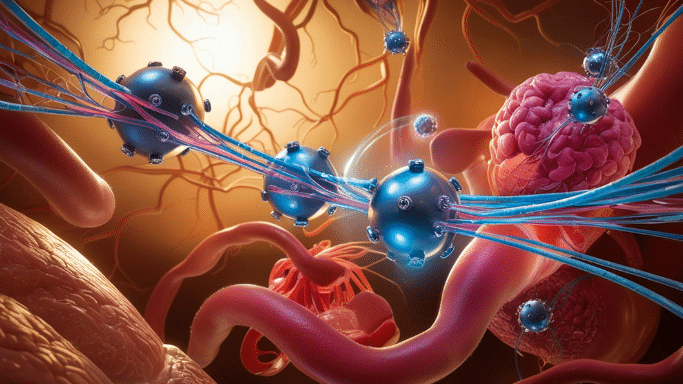
Mechanistic Differences Between Thymosin Alpha 1 and Beta 4
Let’s dive deeper into how each peptide works, because the inner workings are what separate true biohacking optimization from speculative pondering.
Thymosin Alpha 1: Immune System Orchestration
Tα1 works at the level of adaptive immunity, restoring and enhancing cell-mediated immune response in a targeted, intelligent way:
- Drives T cell maturation into CD4+ helper and CD8+ cytotoxic cells.
- Activates NK cells for viral and cancer surveillance.
- Normalizes immune cell counts in compromised populations.
What we’re dealing with here is precise immune modulation with measurable downstream effects.
Thymosin Beta 4: Cellular Structure and Tissue Repair
As an actin-binding protein, Tβ4 sequesters G-actin monomers and prevents their polymerization into F-actin filaments until the cell requires structural reorganization.
This suggests Tβ4 exerts pleiotropic effects on the following biological processes:
- Cell migration
- Wound healing
- Angiogenesis
- Tissue regeneration
However, all of these things have only been observed at the preclinical level.
The immune relevance of Tβ4 appears limited to responses involving virally infected cells, but the exact mechanisms of action remain poorly defined in human studies.
To summarize everything discussed so far in a single sentence:
Tα1 is about immune function, whereas Tβ4 is about tissue structure and repair.

Clinical Evidence Compared: Thymosin Alpha 1 vs Beta 4
Once we dive into the clinical outcomes, the gap between these two peptides becomes widens dramatically.
Thymosin Alpha 1: Robust Human Data
Tα1 has real human randomized controlled trials across multiple disease states:
- Sepsis: Reduced 28-day mortality (OR 0.73 across 1,927 patients).
- Hepatitis B: ~40% complete virological response at standard dosing.
- Cancer: Improved response rates and immune markers when combined with chemotherapy.
- Safety: Well-established with no major adverse events in clinical settings.
While far from perfect, we are ultimately dealing with legitimate human data and real outcomes.
Thymosin Beta 4: Mostly Preclinical Promise
Tβ4 demonstrates impressive pleiotropic effects in tissue regeneration in preclinical models, but clinical translation in humans remains limited.
The human evidence base consists primarily of mechanistic studies on actin regulation and viral response potential.
What we DO NOT have as of right now are high-quality RCTs demonstrating clinical efficacy.
To recap:
- There are strong regenerative effects in animal and cellular models.
- Limited human data exists, and is mostly mechanistic in nature rather than outcome-based.
- No high-quality RCTs prove the peptide’s clinical efficacy (yet)
In observational serum studies, elevated Tβ4 levels were found in only 15% of AIDS patients with immune dysfunction (compared to 54% showing elevated Tα1), suggesting distinct and possibly less prominent immune roles.
NO human or animal clinical trials have directly compared the efficacy or safety of Tα1 and Tβ4 in a head-to-head design.
With this being said, the absence of evidence is not evidence of inefficacy.
It simply means we’re operating on mechanistic theory when it comes to Tβ4 because proven clinical outcomes are not currently available to us.

How to Choose Between Thymosin Alpha 1 and Beta 4
The practical implications are straightforward if are willing to think clearly.
If your goal is immune system restoration, particularly in the context of chronic infection or immune dysfunction, Tα1 has the clinical evidence base to justify consideration.
Dosing protocols from clinical trials typically range from 1.6 mg subcutaneous twice weekly.
(NOTE: THIS IS NOT MEDICAL ADVICE and requires working with a qualified physician!)
If your goal is tissue repair or wound healing within the context of injury recovery, Tβ4 has a compelling mechanistic rationale (albeit with limited human validation).
Even though the preclinical data shows much promise, please recognize you’re working with lower certainty about dose-response relationships and real-world efficacy.
These peptides are NOT interchangeable, and anyone suggesting they are either doesn’t understand the science and/or is trying to sell you something… usually both.
A Critical Warning About Quality and Sourcing
I’ve spent many years warning people about how the peptide market is full of garbage products.
You’re lucky if all you get is an under-dosed vial.
In most cases, you’ll end up dealing with unacceptable levels of contamination (or even receive a fake compound far-removed from what you ordered).
For these reasons, you should always adhere to these principles regardless of which peptide you choose:
- Third-party testing is non-negotiable
- Certificates of analysis matter
- Work with qualified physicians and reputable compounding pharmacies
Should you choose to corners here, you’re wasting money at best and risking your health at worst.

The Bottom Line: Different Tools For Different Jobs
Thymosin Alpha 1 and Thymosin Beta 4 are completely different biological tools.
Tα1 is a well-studied immune modulator with meaningful human clinical data supporting its use in immune restoration, chronic viral infection, and adjuvant cancer therapy.
Tβ4 is a structurally focused peptide with exciting preclinical potential but limited human evidence beyond mechanistic studies.
No official head-to-head trials exist, which means any definitive claims made about superiority are not based on supporting evidence.
Your protocol should be based on YOUR goals, your individual biochemistry biology, and your personal risk tolerance.
In addition to working with clinicians who understand peptide protocols, always demand nothing less than the highest-quality sourcing from the vendor supplying your peptides.
That’s how you break free from the broken sick-care system and the low-level biohacking nonsense trending online at any given time.
Isn’t It Time You Became Fully Optimized To Live Leaner, Longer And Stronger?
Join my #1 online membership group, Fully Optimized Health to receive guidance from me and an elite group of more than 700 male and female biohackers (who all started out just like you)
And don’t forget to check out our other premium educational content dedicated to helping you fully optimize your health:
Quantum Peptides – the A-to-Z system for anyone (newbies & pros alike) desiring to master peptide use for the first time and forever.
Quantum Testosterone – the A-to-Z system for Men & Women to learn to optimize their hormones for explosive energy, lean muscle, and timeless vitality.
The Ultimate GLP-1 Video Masterclass – how to PROPERLY utilize the world’s most powerful weight loss drugs for enhanced fat loss and overall longevity.
The Modern Woman’s Peptide Course – a must-have resource for any woman seeking to become more feminine, sexier, leaner, and healthier through the use of peptides.
Life Enhanced – Unlock the secrets to TOTAL Mind-Body-Spirit Optimization as Hunter Williams and I teach you how to live at the tip of the spear.
30 Days 2 Shredz – Reprogram Your Mind and Body for Maximum Fat Loss in Minimum Time with our Optimized Fasting Protocol
Monica Campbell’s 3 Day PMF Video Training Program – Ignite unbreakable strength, sculpt lean muscle, and conquer workouts fearlessly with my wife Monica’s 3 Day Video training course.
Positive Muscle Failure Video Training Program – Learn how to lift weights correctly for maximum muscle in minimum time while building the physique of your dreams.
See you on the inside!