 Written by Jay Campbell



[Disclaimer: This article is for educational purposes only. Always consult with a qualified healthcare provider before starting any peptide protocol.]
Most antioxidants are a complete waste of money.
They flood your entire body with compounds that interfere with beneficial oxidative signaling, disrupt hormesis, and deliver zero measurable results because they never reach the ONE place where reactive oxygen species (ROS) actually cause aging: your mitochondria.
But SkQ1 is NOT like “most” antioxidants.
Instead, it is a mitochondria-targeted antioxidant that concentrates specifically inside the mitochondrial membrane, neutralizing harmful mitochondrial reactive oxygen species (mtROS) at the source without disrupting the oxidative signaling your body needs for adaptation and resilience.
Long-time followers of the Jay Campbell ecosystem KNOW I’ve been talking about mitochondrial health for years.
The SkQ1 research in animals is presents a compelling use case: Extended lifespan, prevented cytokine storms, reversed age-related decline, protected vision, reduced systemic inflammation, and improved metabolic biomarkers.
But here’s what you need to understand before you get too excited using an SkQ1 supplement…
There are virtually NO published human clinical trials, the mechanism is highly specific in nature, and you’ll be hard-pressed to source it properly.
Now, don’t let all of this deter you into believing SkQ1 is dangerous or ineffective.
I’ve been a human guinea pig for over three decades, and some of the most transformative compounds I’ve ever used had next to no human data when I started experimenting with them.
99 times out of 100, the medical establishment lags behind the bro-science.
This guide will tell you what SkQ1 is, how it works, what the animal data shows, and what you need to know about safety and practical use.
Quick Takeaways
- SkQ1 is a mitochondria-targeted antioxidant that concentrates inside mitochondria to neutralize harmful reactive oxygen species (ROS) at the source
- Animal studies show powerful anti-aging and anti-inflammatory effects that include extended lifespan, prevented cytokine storms, and reversed age-related decline
- Human clinical data is essentially non-existent outside of eye drop formulations for ocular conditions with no reported adverse events
- SkQ1 works by targeting Complex I reverse electron transfer and mtROS production, rather than pointlessly flooding your body with more antioxidants

What Is SkQ1 and Why You Haven’t Heard About It
SkQ1 (10-(6′-plastoquinonyl) decyltriphenylphosphonium) is a synthetic molecule developed by Russian biophysicist Vladimir Skulachev for the specific purpose of targeting mitochondrial oxidative damage.
To describe it in further detail: It is a lipophilic cation (positively charged molecule) that penetrates cell and mitochondrial membranes, and is also a chemical derivative of plastoquinone (a natural antioxidant found in chloroplasts).
The positive charge drives accumulation inside mitochondria, which maintain a negative membrane potential, and this leads to a concentration of SkQ1 hundreds of times higher inside the mitochondrial matrix than in the rest of the cell.
This is NOT your typical antioxidant supplement flooding your bloodstream with compounds going everywhere while achieving nothing.
If you’ve read my article on the best mitochondrial supplements, you already understand why TARGETED delivery is critical for best results.
You haven’t heard about SkQ1 because the research has been conducted primarily in Russia (published in lesser-known journals) and there isn’t a massive pharmaceutical marketing campaign pushing its use in the West.
Research on SkQ1’s development and mechanism has been published for over a decade, but Western supplement companies have largely ignored it.
Such is the nature of the sick-care system: If Big Pharma can’t patent it and charge +$500 a month, it doesn’t exist to them.

How SkQ1 Actually Works: The Mitochondrial Mechanism
Here’s what makes SkQ1 different from every other antioxidant supplement gathering dust in your cabinet.
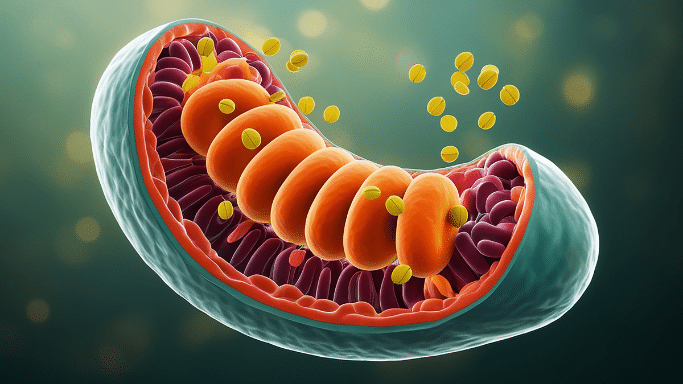
When mitochondria produce ATP through the electron transport chain, electrons occasionally leak and react with oxygen to form superoxide and other reactive oxygen species (ROS).
Under conditions of stress, mitochondrial Complex I can run backward in a process called reverse electron transfer (RET), which massively increases mtROS production and triggers inflammatory cascades.
SkQ1 gets concentrated exclusively at the inner mitochondrial membrane and neutralizes these ROS at the exact site where they’re produced.
Animal studies demonstrate SkQ1 prevents mortality and cytokine elevation induced by injected mitochondria or succinate-loaded mitochondria, effects entirely dependent on mtROS production via Complex I reverse electron transfer.
This specificity matters because it demonstrates SkQ1 doesn’t interfere with beneficial oxidative signaling in the cytoplasm or other cellular compartments.
If you understand how SS-31 works at the inner mitochondrial membrane, then you’ll immediately see the parallel here.
SkQ1 also appears to inhibit the NF-κB pathway, a master regulator of inflammation, and reduce expression of adhesion molecules in endothelial cells during inflammatory responses.
The Research That Matters: What Animal Studies Actually Show
While the animal data is compelling, it’s ONLY animal data.
However, this doesn’t make SkQ1 inherently worthless.
I’ve built my entire optimization career on being willing to look at compelling mechanisms and animal evidence BEFORE the medical establishment gets around to approving a 10-year, double-blind, placebo-controlled trial.
If I waited for “official” human data before trying anything, I’d still be sitting in my doctor’s office being told my testosterone level of 350 ng/dL was “normal.”
Intellectual honesty means being transparent about what we know versus what we’re extrapolating, while also recognizing the absence of human trials is NOT the same as the absence of safety evidence.
Inflammation and Cytokine Storm Prevention
The inflammation research is where SkQ1 shines brightest.
Studies in mice show that SkQ1 pretreatment prevents LPS-induced mortality and cytokine storms, with marked reductions in IL-6 and TNF-α in both young and old animals.
In models of inflammatory bowel disease, SkQ1 prevented dextran sulfate sodium (DSS)-induced colitis by reducing weight loss, colorectal bleeding, colon shortening, and expression of pro-inflammatory cytokines including TNF, IL-6, IL-1β, and ICAM-1.
The mechanism also extends to gut barrier integrity: SkQ1 prevented DSS-induced breakdown of tight junctions (specifically ZO-1 protein release) in intestinal epithelial cells, an effect NOT seen with non-antioxidant analogs.
This suggests the antioxidant activity, and not the mitochondrial targeting alone, is critical for the protective effects.
If you’re dealing with gut inflammation, I strongly recommend KPV peptide therapy and the KLOW blend for targeting NF-κB mediated gut damage.
In that context, SkQ1 may operate through a complementary pathway worth paying attention to.
SkQ1 also inhibits leukotriene synthesis in human neutrophils at concentrations as low as 100 nM, pointing to potential anti-inflammatory effects beyond mere ROS neutralization.
Longevity and Anti-Aging Effects
SkQ1 supplementation extended lifespan in male mice (Wistar and BALB/c strains) to levels seen in female mice and extended lifespan during the early mortality phase in female BALB/c mice.
The same compound increased lifespan in Drosophila melanogaster under normal conditions, though interestingly it DECREASED lifespan under partial starvation, suggesting context-dependent effects that we don’t fully understand.
Any time a compound shows context-dependent effects, it tells you the biological processes taking place are more complex than a simple “take this and live longer” narrative.
Late-life supplementation prevented and even reversed age-related physiological decline in rodents, effects NOT replicated by N-acetyl cysteine (one of the most common antioxidant supplements otu there)
Let that sink in: N-acetyl cysteine (NAC) couldn’t do what SkQ1 did.
Broader anti-aging effects in rodents include improved growth hormone and IGF-1 levels, reduced aortic inflammation (measured by ICAM-1 expression), accelerated wound healing, and delayed cataract formation.
These are pleiotropic effects spanning multiple organ systems and physiological processes, exactly what you’d expect if mitochondrial dysfunction is a core driver of aging.
As I’ve said for YEARS: Your mitochondria are the engine of your biology… when the engine breaks down, EVERYTHING downstream suffers.
If you’ve read my Klotho article, you know mitochondrial biogenesis is the master key to longevity.
SkQ1 approaches the same problem from a different angle: Instead of building more mitochondria, it protects the ones you have from self-destruction.
Eye Health and Retinal Protection
The most developed human application for SkQ1 is in eye drops for ocular conditions.
Dietary SkQ1 reduced retinopathy progression in OXYS rats, a model of accelerated aging and age-related retinal degeneration, preventing retinal pigment epithelium abnormalities, photoreceptor cell death, neuronal degeneration, and blood vessel thrombosis in the choroid.
The compound also restored expression of αB-crystallin, a protective protein in the lens and retina.
Long-term dietary SkQ1 improved lacrimal gland ultrastructure in aging rats, reducing characteristics of dry eye syndrome.
Eye drop formulations have been tested in human clinical trials for various eye conditions with no reported adverse events in either animal studies or human trials, though detailed results remain largely unpublished in Western databases.

The Human Data Situation: What I ACTUALLY Think
As of this writing, there are essentially no human clinical trials for SkQ1 listed on clinicaltrials.gov despite eye drop trials having been conducted.
So what we’re left with is extensive mechanistic data, compelling animal studies across multiple species, and a clear biological rationale.
I’ve been in this game long enough to know that “no human data” is NOT the same as “no evidence of safety” or “doesn’t work in humans.”
When I started using therapeutic testosterone over 24 years ago, conventional medical wisdom said it would give you prostate cancer.
When I started advocating for Metformin as an anti-aging drug, people started calling me reckless.
When I started using MOTS-C and SS-31 for mitochondrial optimization, there were no human clinical trials in existence.
The Russian research groups have conducted human trials for ophthalmic applications, and eye drop formulations have shown zero adverse events.
The oral formulation went through Phase 1 clinical trials in Russia in 2016 without reports of safety concerns.
That being said, anyone telling you SkQ1 is a PROVEN longevity supplement for human use with established dosing protocols is selling you something.
There’s a difference between being an informed self-experimenter and being irresponsible.

Safety, Dosing, and Practical Considerations
The safety profile in animals appears remarkably clean so far.
SkQ1 actually PREVENTED toxic shock induced by C₁₂TPP, a related compound without the antioxidant plastoquinone moiety, and protected against cooling-induced mortality and weight loss that C₁₂TPP exacerbated.
Thereby suggesting the antioxidant component provides protective effects against the potential toxicity of mitochondria-accumulating cations, and therefore the molecule is designed with a built-in safety mechanism.
No adverse events were reported in eye drop formulations tested in humans, though systemic oral supplementation data is essentially absent.
Dosing in animal studies typically ranges from nanomolar to low micromolar concentrations, with dietary supplementation in the range of 5-250 nmol/kg body weight.
The compound is not widely available in the United States through standard supplement channels.
If you’re considering experimenting with SkQ1, understand you’re operating without established human dosing protocols.
It doesn’t mean you shouldn’t do it, but you should approach it the way I approach EVERY new compound: Start at an extremely low dose, track your biomarkers, pay attention to how your body responds, and document everything.
My Final Thoughts About the SkQ1 Supplement
SkQ1 is one of the most scientifically sophisticated approaches to targeting mitochondrial aging and inflammation I’ve seen in three decades of studying longevity interventions.
The mechanism is specific, the animal data is compelling across multiple models, and the safety profile appears favorable.
The absence of robust human clinical data means anyone using this compound is engaging in (hopefully) informed self-experimentation.
Welcome to my world!
That’s how EVERY breakthrough compound starts before the mainstream catches up 10 years later.
I’m watching this space closely, and if human data emerges confirming even a fraction of the animal findings, SkQ1 could become a cornerstone longevity intervention alongside compounds like SS-31, MOTS-C, and Klotho.
If you want to start experimenting now, BioScavenger from BioLongevity Labs is where I’d begin when it becomes available.
Until then, approach this supplement with informed optimism, demand transparency from any supplier, and understand the difference between promising research and established human protocols.
Don’t be the biohacker who jumps on every new compound with dramatic animal data.
Make sure you understand the research, acknowledging what is known and what is unknown.
Then, and only then, make informed decisions based on YOUR risk tolerance and health optimization goals.
That is how you become #FullyOptimized.
Isn’t It Time You Became Fully Optimized To Live Longer And Stronger?
Join my #1 online membership group, Fully Optimized Health to receive guidance from me and an elite group of more than 700 male and female biohackers (who all started out just like you)
And don’t forget to check out our other premium educational content dedicated to helping you fully optimize your health:
Quantum Peptides – the A-to-Z system for anyone (newbies & pros alike) desiring to master peptide use for the first time and forever.
Quantum Testosterone – the A-to-Z system for Men & Women to learn to optimize their hormones for explosive energy, lean muscle, and timeless vitality.
The Ultimate GLP-1 Video Masterclass – how to PROPERLY utilize the world’s most powerful weight loss drugs for enhanced fat loss and overall longevity.
The Modern Woman’s Peptide Course – a must-have resource for any woman seeking to become more feminine, sexier, leaner, and healthier through the use of peptides.
Life Enhanced – Unlock the secrets to TOTAL Mind-Body-Spirit Optimization as Hunter Williams and I teach you how to live at the tip of the spear.
30 Days 2 Shredz – Reprogram Your Mind and Body for Maximum Fat Loss in Minimum Time with our Optimized Fasting Protocol
Monica Campbell’s 3 Day PMF Video Training Program – Ignite unbreakable strength, sculpt lean muscle, and conquer workouts fearlessly with my wife Monica’s 3 Day Video training course.
Positive Muscle Failure Video Training Program – Learn how to lift weights correctly for maximum muscle in minimum time while building the physique of your dreams.
See you on the inside!