


Your doctor slides the lab report across the desk and says, “Your LDL is 98, so your cholesterol looks fine.”
You walk out relieved, unaware the one number that actually counts the particles driving plaque into your arteries wasn’t measured.
When you finally get the sense to order it, your ApoB test comes back at 130.
So while you were fawning over your LDL readings, your arteries were taking a beating.
That four-letter acronym (ApoB) is short for “apolipoprotein B,” and it’s the single biggest blind spot I see in conventional cardiovascular testing.
ApoB is the actual driver of arterial plaque that sits unmeasured on the lab requisition form, but too many doctors are focused on calling it a day after checking for LDL cholesterol and nothing else.
This article will tell you everything you must know about ApoB, while addressing a fundamental gap in how mainstream medicine assesses cardiovascular risk.
This gap is what costs people their arteries (and eventually their lives).
Quick Takeaways
- LDL cholesterol measures a concentration, whereas ApoB measures particle count (i.e. what actually predicts heart disease).
- Two people can have “normal” LDL readings and wildly different ApoB numbers, a phenomenon called “discordance” that gets missed by standard panels.
- ApoB is a cheap and widely available test backed by decades of outcomes data, yet it’s rarely ordered in a routine physical.
- Therapeutic testosterone doesn’t wreck your lipids, but supraphysiologic doses combined with over use aromatase inhibitors definitely will.
- Optimizing ApoB requires understanding the mechanism behind how it works, and this will involve more than taking a drug to change a number.

What ApoB Actually Is
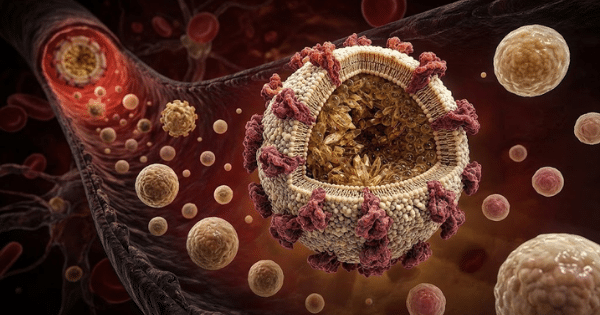
ApoB is the structural protein that wraps every single atherogenic lipoprotein particle in your bloodstream: LDL, VLDL, IDL, lipoprotein(a), and more.
Each of these particles carries exactly one ApoB molecule.
That means when you measure ApoB, you are counting the actual number of particles capable of penetrating your arterial wall.
To use an analogy: Cholesterol is mere cargo, the particle is the delivery truck, and ApoB tells you how many trucks are on the road.
A person can have low LDL cholesterol but a high number of small cholesterol-depleted particles, which can result in their standard lipid panel looking great while their actual atherogenic burden remains high.

Why Your Doctor Isn’t Ordering This Test
The standard lipid panel exists because it’s cheap and familiar, having been baked into decades of clinical guidelines built around LDL-C as a proxy.
Insurance reimbursement models and medical education both lag behind the lipidology research by 15 to 20 years, which is sadly the standard operating procedure for sick-care medicine.
I’ve sat across from cardiologists who still don’t order ApoB routinely, not because the evidence is weak, or because the cardiologist themselves is unconvinced of the utility behind testing for ApoB.
Rather, their workflow has never required it.
Meanwhile, the genetic evidence of prioritizing particle count is about as strong as it gets.
In a large Mendelian randomization study published in JAMA, lowering triglycerides and lowering LDL cholesterol cut coronary risk by the same amount per unit drop in ApoB (i.e. the particle count is what matters, not the cholesterol inside it)..
This is exactly the kind of institutional lag I’ve spent my career warning readers about, and it’s why I wrote an article telling you about the best lab tests you should order t that your doctor probably won’t.

The Mechanistic Truth: One Particle, One ApoB
Atherosclerosis begins when an ApoB-carrying particle crosses the endothelial lining of an artery and gets trapped in the subendothelial space.
Once trapped, that particle undergoes oxidation and triggers an immune response, eventually getting engulfed by macrophages that transform into foam cells.
Foam cells accumulate and recruit more inflammatory signaling to form the fatty streak that eventually becomes a plaque.
The critical variable driving this entire cascade is the number of particles available to get trapped… NOT how much cholesterol each particle happens to be carrying!
You can have small and dense LDL particles (low cholesterol per particle, high particle count), and even have deceptively normal LDL-C, but still end up carrying enormous atherogenic risk.
The LDL receptor pathway, which clears these particles from circulation via the liver, becomes overwhelmed when particle number chronically exceeds clearance capacity.
This chronic excess is what predicts cardiovascular outcomes over a lifetime.

LDL-C vs ApoB vs Particle Number
I want to make this simple as most explanations overcomplicate the comparison I AM about to make.
| Marker | What It Measures | Limitation |
|---|---|---|
| LDL-C | Total cholesterol mass inside LDL particles | Misses particle number and size variation |
| ApoB | Total count of all atherogenic particles | Requires a specific lab order, underused clinically |
| LDL-P (NMR) | Direct particle count via nuclear magnetic resonance | More expensive, less standardized across labs |
ApoB is the most practical and cost-effective proxy for particle number available today.
I consider it non-negotiable in any serious lipid workup, and so should you.

Myth vs Reality
Let’s clear up the confusion behind some of the most common talking points.
Myth: Normal LDL cholesterol means your cardiovascular risk is low.
Reality: Discordance between LDL-C and ApoB is common.
And in more than 375,000 UK Biobank participants, people whose ApoB ran higher than their LDL had a higher frequency of major cardiovascular events.
Myth: High HDL cancels out cardiovascular risk.
Reality: HDL function matters more than HDL quantity, and it does nothing to reduce the number of ApoB particles that are already circulating.
Myth: Only “high cholesterol” patients need ApoB testing.
Reality: Metabolically healthy-looking individuals with insulin resistance and/or a high-carbohydrate diet frequently show elevated ApoB levels despite pristine LDL-C readings.
That last one is exactly why I will never read a lipid panel without fasting insulin sitting right next to it.

What I’ve Learned From Years Of Testing My Own ApoB
I’ve run ApoB alongside a full lipid panel for years, specifically because I don’t trust any single number to tell the whole story.
Early in my health optimization journey, I made the mistake of looking at a “good” LDL-C number and assuming I was in the clear.
When I finally ran ApoB alongside lipoprotein(a) and a full particle panel, that’s when everything changed.
It forced me to adjust my diet and my training while investigating additional intervention options with my optimization-minded physician.
As I laid out in The Testosterone Optimization Therapy Bible, testosterone at therapeutic doses has little to no effect on HDL… if anything it has been shown to lower triglycerides and LDL.
The lipid damage people blame on testosterone comes from the use of supraphysiologic doses only seem at the highest levels of competitive bodybuilding.
The other culprit is aromatase inhibitors because drugs like Arimidex lower HDL, and it’s yet another reason to understand the importance of having optimal estradiol levels before you ever reach for one.
So test ApoB before you start any protocol that touches lipid metabolism, and test it again as you’re in the middle of executing the protocol.
I test on a quarterly basis instead of annually whenever I’m running anything that could shift my lipids, with my list of biomarkers for men over 40 putting ApoB right at the top.

Women And ApoB: Why Menopause Changes Everything
Women are not exempt from this conversation.
Estrogen has a protective effect on lipid metabolism before menopause, which often masks rising ApoB until the perimenopausal transition accelerates it rapidly.
That’s one more reason why a woman’s labs can look “normal” while she feels terrible, which I break down in my article discussing the perimenopause crash.
My wife Monica’s rule for women starting any protocol is to start low and go up slow, tracking any responses to new interventions instead of blindly guessing.
Women starting hormone replacement therapy should insist on a baseline ApoB test before starting, and another test conducted a few months later, as the assumption that “women don’t get heart disease until later” is exactly the kind of mainstream complacency that hurts women.

How To Get Tested And What Numbers Actually Matter
Getting an ApoB test is simpler than most people think, but knowing what to do with the number matters more than the test itself.
Here is what I tell my community:
- Request ApoB by name on your next lab order; it’s a simple blood draw available through most major reference labs.
- Optimal ranges generally cited in outcomes research sit below 80 mg/dL for average risk, and below 60 mg/dL for those seeking aggressive cardiovascular risk reduction.
- Test alongside lipoprotein(a), fasting insulin, and hs-CRP as ApoB in isolation doesn’t give you the complete atherogenic picture (my guide to measuring inflammaging also covers hs-CRP).
- Retest after any major intervention — a diet change, a new supplement, a hormone protocol adjustment, or anything else.
- Don’t accept “your cholesterol looks fine” as a final answer if your ApoB has never been checked.
If your ApoB comes back high, fix the foundation first.
As I lay out in newest book Living Leaner Longer Stronger, lifting weights 3-4 times a week is the most underrated insulin-sensitizing tool that exists.
And as I AM sure you already know, insulin resistance is one of the biggest drivers of particle overproduction.
The TOT Bible also lists four over-the-counter options that each improve your lipid profile through a different mechanism: Omega-3 fish oil, citrus bergamot, red yeast rice, and krill oil.

Safety, Risks, and Contraindications
NOTE: I am not a physician, and nothing here constitutes medical advice, diagnosis, or treatment.
ApoB testing itself carries no more risk than a standard blood draw.
The real risk lies in misinterpreting an elevated number and reaching for the first prescription offered without understanding the root cause: Insulin resistance, genetic lipoprotein(a) elevation, or even something like diet-driven particle overproduction.
Statin therapy and other lipid-lowering interventions carry their own tradeoffs and should only be pursued in partnership with a physician who understands both the clinical literature and your individual metabolic context.
If you do end up on a statin, supplement it with CoQ10 because statins significantly deplete its production in the human body.
Never adjust hormone protocols, supplements, or medications based solely on an ApoB number unless you are doing so under guidance from a doctor who actually practices optimization medicine.

Own Your Numbers, Own Your Future
You cannot optimize what you refuse to measure.
As we’ve just discovered, ApoB is one of the most important numbers sick-care medicine still isn’t measuring by default.
Waiting for your annual physical to catch this is a bet I’m not willing to make with my own arteries…
…. and if we’re being honest with each other, you shouldn’t be making that bet either.
Health sovereignty means walking into your next appointment and requesting the test yourself, refusing to accept “your cholesterol is fine” as the end of the conversation.
Isn’t It Time You Became Fully Optimized To Live Leaner, Longer And Stronger?
Join my #1 online membership group, Fully Optimized Health to receive guidance from me and an elite group of more than 800 male and female biohackers (who all started out just like you).
And don’t forget to check out our other premium educational content dedicated to helping you fully optimize your health:
Live Leaner, Longer, Stronger: The 2026 God Stack Masterclass: the exact stack I run today, from therapeutic testosterone and FLGR242 to α-Klotho and retatrutide. Five compounds, 26 years of self-experimentation, zero theory.
The Ultimate GLP-1 Video Masterclass: how to PROPERLY use the world’s most powerful fat loss drugs to lose fat, keep your muscle, and improve your longevity.
The Positive Muscle Failure Video Training Method: three filmed full-body workouts with Monica and me that teach you to train to failure, not to exhaustion, for maximum muscle in minimum time.
Monica Campbell’s Ultimate 3-Day Training Program: my wife Monica’s full-body program for women ready to build real strength, sculpt lean muscle, and train with intensity.
The 30 Days 2 Shredz Video Masterclass: reprogram your mind and metabolism to torch fat with our Optimized Fasting Protocol, without the hunger and willpower battles.
Raise Your Vibration: the dimension of health that biohacking always misses. Monica and I walk you through the five pillars of a high-frequency life, grounded in the data
See you on the inside!
[Disclaimer: This article is for educational purposes only. It does not constitute medical advice, diagnosis, or treatment. Always consult a qualified healthcare professional before beginning any peptide or hormonal protocol.]