

[Disclaimer: This article is for educational purposes only. Always consult with a qualified healthcare provider before starting any peptide protocol.]
A lot of men over 40 are tracking the wrong metrics.
Numbers like fasting glucose levels and cholesterol panels certainly have their place within the confines of optimizing healthspan.
But I AM here to tell you most men are ignoring one of the most powerful and research-validated predictors of how long they will actually live:
How hard they can squeeze their hand.
Your grip strength is a window into your systemic biological health, your hormonal status, your neurological integrity, and your long-term survival odds.
And in this article, you’re going to see why this seemingly pointless party trick is something serious scientists have been paying closer attention to.
Quick Takeaways
- Weak grip strength is independently associated with higher all-cause mortality, cardiovascular death, and accelerated aging
- Grip strength reflects systemic muscle quality and neural drive
- Improving grip strength requires addressing the root causes: training, testosterone, nutrition, and recovery
- A strong hand grip is one of the most underutilized and undervalued biomarkers in functional medicine today

Why Your Doctor Never Talks About Hand Strength
Most physicians are trained to react to disease, rather than take a more proactive approach.
Their prescribed annual physicals will check for standardized markers such as blood pressure, basic lipids, vitamin levels, and blood sugar.
What it almost never includes is a dynamometer reading: The simple hand-squeeze device that measures grip force in kilograms or pounds.
This single number can serve as a powerful signal pertaining to the health of you entire physiological system.
This is a systemic failure of sick-care medicine, as the connection between grip strength and lifespan has been well-established for some time.

What the Research Actually Shows
A landmark 2015 study published in The Lancet by Leong and colleagues analyzed over 139,000 adults across 17 countries in the PURE study and found every 5 kg decrease in grip strength was associated with a 17% increase in cardiovascular mortality and a 16% increase in all-cause mortality.
In fact, grip strength is an arguably stronger predictor for lifespan than systolic blood pressure.
A 2018 analysis using UK Biobank data by Celis-Morales and colleagues confirmed low grip strength was independently associated with higher risk of all-cause mortality, cardiovascular disease, respiratory disease, and even cancer mortality.
Why does this finding keep appearing in large-scale studies?
The answer is simple: Sarcopenia, the age-related loss of skeletal muscle mass and function, is one of the most destructive physiological processes a human body can undergo.
And it just so happens grip strength is one of the earliest and most measurable signals of sarcopenia.

The Mechanistic Story You Rarely Hear
Grip strength is more than how much muscle strength exists in the palms of your hands.
It is a proxy biomarker for your entire neuromuscular system, your mitochondrial density, your hormonal output, and your systemic inflammatory load.
Here’s several reasons why grip strength matters for both heathspan and lifespan:
- Skeletal muscle is an endocrine organ. It secretes myokines, signaling proteins like IL-6, irisin, and BDNF that regulate metabolism, inflammation, insulin sensitivity, and even brain health.
- Grip force requires full-chain neural recruitment. Declining grip often reflects declining motor unit activation, which mirrors overall neurological health.
- Testosterone and IGF-1 are direct drivers of grip strength. As androgen levels drop with age, muscle fiber quality deteriorates and grip force predictably declines with it.
- Mitochondrial function determines muscular endurance and force output. A weak grip often correlates with impaired oxidative phosphorylation in type I and type II muscle fibers.
- Systemic inflammation degrades neuromuscular performance. Elevated CRP and IL-6 are consistently inversely correlated with grip strength in aging populations.
Since it’s effectively measuring everything that happens beneath the surface, grip strength can accurately predict mortality across virtually every disease category studied.

Grip Strength Across the Lifespan: What Decline Actually Looks Like
Grip strength peaks in most men somewhere between ages 30 and 40.
After that, it shows a progressive decline that accelerates sharply after age 55 if nothing is done to intervene (according to the research from Dodds and colleagues published in PLoS ONE in 2014).
Women follow a similar trajectory but from a lower absolute baseline, which is a critical consideration for any woman in perimenopause or menopause when estrogen-driven muscle protection begins to erode.
As for what accelerates a decline in grip strength, numerous factors are simultaneously at play:
- Testosterone deficiency (in men) and estrogen/testosterone deficiency (in women)
- Sedentary behavior and absence of resistance training
- Chronic protein insufficiency
- Sleep deprivation and elevated cortisol
- Systemic inflammation from poor diet, alcohol, select medications, or unmanaged metabolic dysfunction
- Neurological deterioration from vascular disease or neurodegenerative processes

Myth vs. Reality: What Most People Get Wrong
| Myth | Reality |
| Grip strength only matters for athletes | It predicts mortality in the general population regardless of athletic status |
| Weak grip is just a normal part of aging | Decline is common but NOT inevitable with proper intervention |
| You can improve grip with hand exercises alone | Root causes are hormonal, metabolic, and systemic |
| Grip strength is a vanity metric | It is a validated clinical prognostic marker used in major longitudinal studies |
| Women don’t need to worry about this | Low grip strength predicts mortality risk equally across sexes |

The Hormonal Axis Nobody Connects to Grip
In my humble and educated opinion, loss of grip strength in men over 40 is driven by testosterone deficiency.
Testosterone directly binds to androgen receptors in skeletal muscle.
This triggers a series of biological cascades that drive protein synthesis, satellite cell activation, and muscle fiber hypertrophy.
When testosterone drops, and it drops hard after 40 in men who are not actively managing their hormonal health, muscle fiber quality degrades and neural drive weakens… from there, grip force goes down.
I have seen this pattern thousands of times in the optimization community.
A man gets on a properly managed testosterone replacement therapy (TRT) protocol and his grip strength improves alongside his lean mass and his metabolic markers.
This is a predictable and replicated progression, which I mapped out in my TRT timeline piece.
For women, Monica and I consistently emphasize the critical roles played by estrogen and testosterone in muscle preservation post-menopause.
And grip strength decline is one of the first measurable warning signs that hormonal optimization is overdue, which is something Monica covers directly on her page at JayCampbell.com.

What to Actually Do About Failing Grip Strength
If you think you can play around with a hand gripper you bought on Amazon and calling it a day, you’re only fooling yourself into thinking you’re on the right track.
Restoring and improving grip strength requires a systems-level, bottom-up approach.
Step 1: Get Measured
A handgrip dynamometer test is inexpensive and can be done at a sports medicine or functional medicine clinic.
For men, a reading below 35 kg in dominant hand grip force is a red flag worth addressing immediately.
Step 2: Fix the Hormonal Foundation
Work with an optimization-minded physician to get a full hormonal panel including total testosterone, free testosterone, SHBG, estradiol, IGF-1, and DHEA-S.
Do not accept “your levels are normal for your age” as an answer as it is far removed from “optimal.”
Step 3: Train With Load
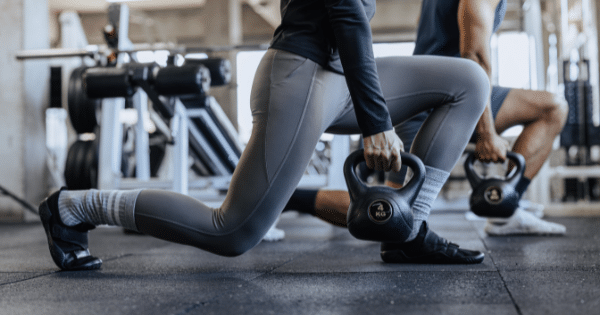
Grip strength responds to compound resistance training, specifically movements that demand substantial grip engagement.
This is the territory my muscle building protocol is designed around.
Some ideas for grip-specific exercises include the following:
- Farmer carries
- Pull-ups and chin-ups
- Barbell and dumbbell rows
- Loaded carries of any kind
Step 4: Optimize Protein Intake
Muscle protein synthesis requires adequate leucine-rich protein, and most men over 40 are chronically protein-malnourished.
Target a minimum of 1.0 grams of protein per pound of lean body mass daily.
Step 5: Address Inflammation
Chronic low-grade systemic inflammation directly impairs neuromuscular performance.
Prioritize sleep, manage stress, eliminate processed seed oils, and reduce alcohol… all the things I’ve been telling people to do for the past 30 years.
Where appropriate, consider the use of evidence-backed anti-inflammatory compounds like omega-3 fatty acids.

Safety and Important Considerations
Grip training and resistance exercise are appropriate for most healthy adults.
However, there are a few caveats:
- If you have existing cardiovascular disease, joint pathology, or connective tissue disorders, work with a qualified practitioner before implementing high-intensity resistance protocols.
- Hormonal optimization must be supervised by an experienced clinician who thoroughly understands the nuance of testosterone replacement therapy.
And one more warning worth mentioning on its own:
Grip strength decline that is sudden or accompanied by neurological symptoms (numbness, tingling, or unilateral weakness) warrants immediate medical evaluation to rule out cervical spine pathology or neurodegenerative conditions.

The Bottom Line on Grip Strength and Lifespan
The men who age powerfully are the men who maintain their muscular strength, their hormonal health, and their metabolic function simultaneously.
Grip strength is the signal that lets you know if all three things are being pursued the right way.
When your grip is strong, it means your testosterone is working, your muscles are responding, your nerves are firing, your mitochondria are producing, and your inflammation is managed.
When your grip is weak, something upstream has broken down… and your body is screaming at you to do something about it.
Improving your hand strength is the first step to treating your body as something worth understanding at a deeper level than your average annual physical will ever reveal.
If you want to go deeper on the health optimization frameworks that drive real longevity, here are the next steps to take:
- Check out my longevity protocol
- Get on my email list at JayCampbell.com
- Find a community that takes these types of discussions seriously
Isn’t It Time You Became Fully Optimized To Live Leaner, Longer And Stronger?
Join my #1 online membership group, Fully Optimized Health to receive guidance from me and an elite group of more than 800 male and female biohackers (who all started out just like you)
And don’t forget to check out our other premium educational content dedicated to helping you fully optimize your health:
Quantum Peptides – the A-to-Z system for anyone (newbies & pros alike) desiring to master peptide use for the first time and forever.
Quantum Testosterone – the A-to-Z system for Men & Women to learn to optimize their hormones for explosive energy, lean muscle, and timeless vitality.
The Ultimate GLP-1 Video Masterclass – how to PROPERLY utilize the world’s most powerful weight loss drugs for enhanced fat loss and overall longevity.
The Modern Woman’s Peptide Course – a must-have resource for any woman seeking to become more feminine, sexier, leaner, and healthier through the use of peptides.
Life Enhanced – Unlock the secrets to TOTAL Mind-Body-Spirit Optimization as Hunter Williams and I teach you how to live at the tip of the spear.
30 Days 2 Shredz – Reprogram Your Mind and Body for Maximum Fat Loss in Minimum Time with our Optimized Fasting Protocol
Monica Campbell’s 3 Day PMF Video Training Program – Ignite unbreakable strength, sculpt lean muscle, and conquer workouts fearlessly with my wife Monica’s 3 Day Video training course.
Positive Muscle Failure Video Training Program – Learn how to lift weights correctly for maximum muscle in minimum time while building the physique of your dreams.
See you on the inside!