 Written by Jay Campbell





[Disclaimer: This article is for educational purposes only. Always consult with a qualified healthcare provider before starting any peptide protocol.]
If you’re on testosterone replacement therapy or thinking about it, someone has probably told you HCG is mandatory for maintaining testicular function and fertility.
And for years, that’s been the standard protocol… until supply chain issues, FDA restrictions, and skyrocketing costs forced clinicians to look for alternatives.
Enter gonadorelin, a synthetic analog of gonadotropin-releasing hormone (GnRH) that works upstream of HCG by stimulating your body’s natural production of luteinizing hormone (LH) and follicle-stimulating hormone (FSH).
But here’s the question nobody’s answering, at least not clearly:
Which one actually works better for maintaining testosterone production, preventing testicular shrinkage, and preserving fertility while you’re on exogenous testosterone?
I’m going to cut through the confusion with 30+ years of direct experience, collaborations with leading hormone optimization physicians, and the physiology that actually governs these compounds.
And you’ll see who ends up being the winner in the tiresome “gonadorelin vs. HCG” debate.
Quick Takeaways
- Gonadorelin stimulates your pituitary to produce LH and FSH naturally, while HCG mimics LH directly at the testicles
- HCG has decades of clinical data backing its use, but Gonadorelin may preserve more natural hormone signaling while avoiding LH receptor desensitization
- Gonadorelin requires more frequent dosing (daily subcutaneous injections) compared to HCG (2-3 times weekly)
- Neither is a magic bullet, and individual responses vary significantly based on pituitary function, dose, and overall protocol

What Most Guys Get Wrong About HCG and Gonadorelin
Let me start by destroying the most common myth:
You CANNOT just swap gonadorelin and HCG at equivalent doses and get the same results.
These compounds work through entirely different mechanisms, which means they have different dosing protocols, different response curves, and different clinical outcomes.
HCG (human chorionic gonadotropin) is a hormone extracted from the urine of pregnant women that directly mimics LH at the Leydig cells located in your testicles.
It entirely bypasses both your hypothalamus and pituitary.
Gonadorelin, on the other hand, is a synthetic version of the same GnRH your hypothalamus naturally produces.
It works upstream by telling your pituitary to release LH and FSH, which then sends the signal to your testicles.
This distinction matters more than most clinicians realize.

How Gonadorelin Actually Works
Gonadorelin acetate (available as Lutrepulse) is bioidentical to your body’s natural gonadotropin-releasing hormone.
When you inject it subcutaneously, it binds to GnRH receptors on your pituitary gland and triggers the release of both LH and FSH.
Unlike HCG, gonadorelin stimulates FSH production, which is essential for spermatogenesis (sperm production) and overall testicular health.
Here’s why that matters…
When you’re on exogenous testosterone, your hypothalamic-pituitary-gonadal (HPG) axis shuts down because your brain detects high testosterone levels and stops producing GnRH.
No GnRH means no LH or FSH, which means your testicles atrophy and sperm production crashes.
Gonadorelin restores this signaling by directly replacing the GnRH your hypothalamus is no longer producing.
The major downside are the daily subcutaneous injections required, since gonadorelin has a very short half-life in circulation (~2-4 minutes).
Some protocols use twice-daily dosing to better mimic the body’s natural pulsatile GnRH release, with a typical dose of gonadorelin ranging from 100-200 mcg per injection.

How HCG Actually Works
HCG is a glycoprotein hormone that structurally resembles LH.
It binds to the same LH receptors on Leydig cells in your testicles and stimulates the production of testosterone and other hormones such as pregnenolone and DHEA.
This is why guys who use HCG on TRT have relied on it as the gold standard for decades: It works reliably, predictably, and with well-established dosing protocols.
Typical doses range from 250-500 IU administered 2-3 times per week subcutaneously.
Clinical research spanning decades demonstrates that HCG effectively maintains testicular volume, intratesticular testosterone levels, and fertility in men on TRT.
Unfortunately, HCG can desensitize LH receptors over time… especially at higher doses or with chronic use.
This can reduce testicular responsiveness and potentially require higher doses to achieve the same effect.
Something I’ve seen repeatedly occur in guys who’ve been on HCG for years without cycling off.
HCG also doesn’t significantly stimulate FSH, which means it may not fully preserve spermatogenesis compared to Gonadorelin.
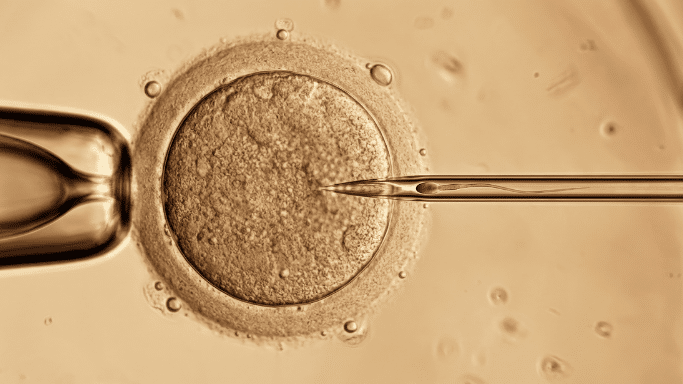
Gonadorelin vs HCG: The Real Differences
With the background information and science out of the way, let’s break down the differences between Gonadorelin and HCG in a way that actually matters for your TRT protocol…
Mechanism:
- Gonadorelin stimulates your pituitary (upstream)
- HCG directly stimulates your testicles (downstream)
Hormone Profile:
- Gonadorelin increases both LH and FSH
- HCG mimics LH only
Dosing Frequency:
- Gonadorelin requires daily or twice-daily injections
- HCG typically dosed 2-3 times weekly
Receptor Sensitivity:
- Gonadorelin works through natural signaling pathways and may avoid receptor desensitization
- HCG can potentially desensitize LH receptors with chronic high-dose use
Clinical Data:
- HCG has decades of studied research in fertility and TRT
- Gonadorelin has strong physiological rationale but less direct clinical data in the TRT population
Cost and Availability:
- HCG has faced supply shortages and FDA restrictions, making it expensive and sometimes unavailable
- Gonadorelin is available through compounding pharmacies and is generally more accessible
Fertility Preservation:
- Gonadorelin may be superior for fertility due to FSH stimulation
- HCG maintains intratesticular testosterone but doesn’t significantly raise FSH

Which One Should You Use on Testosterone Therapy?
Here’s my take after years of experimentation and clinical observation:
If you have normal pituitary function and fertility is a priority, Gonadorelin is likely the superior choice because it stimulates both LH and FSH.
As a result, it more closely mimicking your natural hormonal signaling.
Research in hypogonadotropic patients shows pulsatile GnRH administration can produce testicular growth and hormone production comparable to HCG/hMG combination therapy.
If you want convenience, established dosing protocols, and proven outcomes: HCG remains the gold standard with decades of clinical validation.
If you’ve been on HCG for years and notice diminishing returns: Switching to gonadorelin may restore receptor sensitivity and improve testicular response.
If you have pituitary dysfunction or damage: Gonadorelin won’t work because your pituitary can’t respond to the GnRH signal, making HCG your only viable option.
But at the end of the day, individual responses vary dramatically.
I’ve seen guys thrive on HCG while experiencing testicular atrophy on gonadorelin, and vice versa.
The only way to know what works for YOU is to work with a knowledgeable physician, track your labs (LH, FSH, total and free testosterone, estradiol, etc.), monitor subjective markers like testicular size and libido, and adjust accordingly.

Safety and Practical Considerations
Both compounds are generally well-tolerated when used appropriately, but there are also risks with both compounds you should be aware of.
HCG Risks:
- Potential LH receptor desensitization with chronic use
- Can significantly increase estradiol conversion, requiring careful aromatase management
- May cause testicular sensitivity or discomfort in some users
- Rare cases of antibody formation against HCG
Gonadorelin Risks:
- Requires strict adherence to daily injection protocols
- Less established dosing guidelines in TRT populations
- May not work effectively if you have underlying pituitary issues
- Injection site reactions
Critical Warning for Both Gonadorelin and HCG: DO NOT use either compound as a standalone testosterone booster if you have primary hypogonadism (testicular failure)!
Neither HCG nor Gonadorelin will fix broken testicles that can’t respond to hormonal signaling.
These are adjunct therapies designed to preserve testicular function WHILE USING TRT, and not to replace testosterone therapy itself.
You also need to understand that maintaining fertility on TRT is not guaranteed, even with HCG or Gonadorelin.
The relationship between testosterone and sperm production is complex, and some guys maintain perfect sperm counts while others see dramatic reductions despite adjunct therapy.
If fertility is non-negotiable, consider banking your sperm before starting TRT or exploring alternatives like peptides for sexual health and erectile function, Enclomiphene, or natural optimization protocols first.

The Bottom Line
The gonadorelin vs HCG debate isn’t about which compound is objectively “better”…
The right question to ask is which one will be better for YOU based on your goals, physiology, and practical constraints.
HCG is the proven workhorse with decades of clinical data, established dosing, and reliable outcomes for most men.
Gonadorelin is the physiologically elegant superior alternative to HCG that works upstream, stimulates FSH, and may avoid receptor desensitization issues.
In my experience, gonadorelin for hormone optimization deserves serious consideration for guys who prioritize fertility, wish to maintain more natural hormonal signaling, and/or have experienced diminishing returns on HCG.
But the required commitment to daily injections may not be feasible for everyone.
The real solution is to stop looking for a one-size-fits-all answer and start optimizing YOUR protocol based on YOUR labs, YOUR response, and YOUR health sovereignty.
Work with a physician who understands these nuances, can prescribe Gonadorelin or HCG based on your specific needs, monitors your key health biomarkers closely, and adjusts based on actual outcomes.
That’s how you break free from the limitations of cookie-cutter sick-care and step into truly optimized hormonal health.
Want to learn more about peptides for optimizing male hormones and performance?
Or discover the best peptides for testosterone optimization?
Join my #1 online membership group, Fully Optimized Health to receive guidance from me and an elite group of more than 700 male and female biohackers (who all started out just like you)
And don’t forget to check out our other premium educational content dedicated to helping you fully optimize your health:
Quantum Peptides – the A-to-Z system for anyone (newbies & pros alike) desiring to master peptide use for the first time and forever.
Quantum Testosterone – the A-to-Z system for Men & Women to learn to optimize their hormones for explosive energy, lean muscle, and timeless vitality.
The Ultimate GLP-1 Video Masterclass – how to PROPERLY utilize the world’s most powerful weight loss drugs for enhanced fat loss and overall longevity.
The Modern Woman’s Peptide Course – a must-have resource for any woman seeking to become more feminine, sexier, leaner, and healthier through the use of peptides.
Life Enhanced – Unlock the secrets to TOTAL Mind-Body-Spirit Optimization as Hunter Williams and I teach you how to live at the tip of the spear.
30 Days 2 Shredz – Reprogram Your Mind and Body for Maximum Fat Loss in Minimum Time with our Optimized Fasting Protocol
Monica Campbell’s 3 Day PMF Video Training Program – Ignite unbreakable strength, sculpt lean muscle, and conquer workouts fearlessly with my wife Monica’s 3 Day Video training course.
Positive Muscle Failure Video Training Program – Learn how to lift weights correctly for maximum muscle in minimum time while building the physique of your dreams.
See you on the inside!