
 Written by Jay Campbell





[Disclaimer: This article is for educational purposes only. Always consult with a qualified healthcare provider before starting any peptide protocol.]
Most people chasing weight loss are still wondering if they should use Semaglutide in isolation, completely unaware a more powerful dual-pathway combination has already outperformed it in Phase 3 clinical trials.
This combination, known as CagriSema (Cagrilintide + Semaglutide), is more than a minor upgrade.
It is a fundamentally different approach to metabolic optimization, one targeting two separate neurological circuits simultaneously to suppress appetite at a level that Semaglutide monotherapy simply cannot match.
I’ve been watching the development of this dual-agent approach closely, and I can tell you this much…
The data coming out of the REDEFINE Phase 3 trials published in the New England Journal of Medicine is compelling enough to where anyone serious about body composition and metabolic health should start paying more attention to it.
More specifically, now is the time to understand exactly how it works and how it should be dosed.
Allow me to break down everything you MUST know about both peptides, and give you my personal CagriSema dosage chart so you can start applying this information right away.
Quick Takeaways
- CagriSema combines Semaglutide (GLP-1 agonist) and Cagrilintide (amylin analog & agonist) to hit two distinct appetite-suppressing pathways.
- Phase 3 REDEFINE 1 data showed a 22.7% mean body weight reduction at 68 weeks, outperforming Semaglutide alone (16.1%) AND Cagrilintide alone (11.8%).
- InType 2 diabetics, REDEFINE 2 led to a mean body weight loss of 13.7% vs 3.4% with placebo at 68 weeks.
- Dosing requires a slow, stepwise titration to minimize gastrointestinal side effects.
- This is not a beginner-level compound and should never be used as a shortcut without understanding the mechanism powering its effects.

What Is CagriSema and How Does It Work
CagriSema is not a single molecule.
It is a fixed-dose combination of two distinct peptide-based therapeutics working in unison.
The first component, Semaglutide, is a glucagon-like peptide-1 (GLP-1) receptor agonist that activates GLP-1 receptors throughout the central nervous system and peripheral tissues.
The four main outcomes of doing so are increased insulin secretion, reduced glucagon output, delayed gastric emptying, and blunted appetite signaling.
The second component, Cagrilintide, is a long-acting amylin analog that activates amylin receptors (while the calcitonin receptor complexes paired with receptor activity-modifying proteins, or RAMPs) concentrated in the area postrema and hypothalamus.
Think of it this way:
- Semaglutide mimics a gut hormone (GLP-1) telling your brain “I’m full”
- Cagrilintide mimics a pancreatic hormone (amylin) telling your brain “I’ve had enough food”
Two totally different signaling systems in your body leading to a similar practical outcome.
GLP-1R activation engages cAMP signaling and directly stimulates POMC/CART neurons, while inhibiting NPY/AgRP neurons in the hypothalamus.
Amylin receptor activation reinforces this satiety signaling from the brainstem and hypothalamus via overlapping but distinct pathways.
The end result is both additive and synergistic when it comes to appetite suppression.
You’re hitting the hunger and satiety signaling pathways from two completely different angles at the same time, which is what separates CagriSema from anything else currently available to biohackers.

Why Semaglutide Alone Is Not Enough for Some People
Single-pathway interventions, as effective as they are, always have a ceiling.
Long-time followers of the Jay Campbell ecosystem KNOW I’ve been ALL IN on multi-pathway approaches to metabolic optimization.
Whether it’s combining testosterone with pregnenolone and DHEA for complete hormone optimization, or stacking BPC-157 with TB-500 for healing, the best results come from the simultaneous targeting of complementary biological systems.
Semaglutide may have changed the conversation around GLP-1 therapy years ago when it produced meaningful weight loss results compared to whatever else was available at the time.
But biology is redundant by design, and the brain possesses multiple overlapping systems for the maintenance of energy homeostasis.
When you only block one pathway, compensatory mechanisms elsewhere reduce its overall impact over time.
CagriSema short-circuits that compensation by engaging both the GLP-1 axis AND the amylin axis simultaneously, preventing the degree of metabolic adaptation that usually limits long-term results on Semaglutide alone.
As you’re soon going to see, this thinking is backed by the latest Phase 3 data examining the use of CagriSema for weight loss.

Phase 3 REDEFINE Trial Results: What the Data Actually Shows
Let me give you the numbers that matter, straight from the REDEFINE Phase 3 trials recently published in the New England Journal of Medicine.
In REDEFINE 1, CagriSema achieved 22.7% mean weight loss at week 68 in adults with overweight or obesity but without diabetes.
A dramatically better result than Cagrilintide monotherapy at 2.4 mg (11.8% weight loss) or Semaglutide monotherapy at 2.4 mg (16.1% weight loss).
We’re talking about a 41% GREATER weight loss than Semaglutide used in isolation!
40.4% of CagriSema patients achieved 25% or more weight loss, whereas only 16.2% of Semaglutide patients hit that threshold and a mere 6.0% of Cagrilintide monotherapy patients got there.
Half of participants with obesity who received CagriSema reached a non-obese BMI by the end of treatment.
But here’s what REALLY matters if you’re dealing with Type 2 diabetes (T2D)…
The REDEFINE 2 trial showed CagriSema achieving 13.7% weight loss vs 3.4% with placebo at 68 weeks in T2D patients.
When accounting for full treatment adherence, that number climbed to 15.7%.
What I found to be even more impressive was 73.5% of CagriSema patients achieving an HbA1c of 6.5% or less, compared to just 15.9% of placebo users.
CagriSema also produced significant improvements in systolic blood pressure (a 10.9 mmHg reduction), along with improvements in lipid levels and inflammatory markers.
These are robust, clinically meaningful differences with a direct translation to real-world body composition transformations.
Head-to-Head Comparison
| Cagrilintide | Semaglutide | CagriSema (Combination) | |
| Peptide class | Amylin analog | GLP-1 agonist | Both |
| Receptor target | Amylin (CTR-RAMP complex) | GLP-1 receptor | Dual: GLP-1 + amylin |
| Primary mechanism | Satiety signaling via brainstem | Incretin response via pancreas/brain | Dual-pathway appetite suppression |
| Mean weight loss at 68 weeks (non-diabetic) | 11.8% | 16.1% | 22.7% |
| Patients achieving ≥25% weight loss | 6.0% | 16.2% | 40.4% |
| Mean weight loss at 68 weeks (T2D) | N/A | N/A | 13.7% (15.7% with full adherence) |
| HbA1c ≤6.5% achieved (T2D patients) | N/A | N/A | 73.5% vs 15.9% placebo |
| Systolic BP reduction | N/A | Moderate | 10.9 mmHg |
| GI adverse events | Moderate | Moderate | ~79.6% (mostly mild to moderate) |
| FDA approval status | Not approved | Approved (Ozempic/Wegovy) | NDA filed; review expected 2026 |
The CagriSema Dosage Chart
The dosing framework used in clinical trials follows a gradual titration model.
One identical in structure to GLP-1 monotherapy protocols, but applied across both active compounds at the same time.
Standard Titration Schedule (Based on Trial Protocols)
| Week | Cagrilintide Dose | Semaglutide Dose |
| 1-4 | 0.16 mg | 0.25 mg |
| 5-8 | 0.30 mg | 0.5 mg |
| 9-12 | 0.6 mg | 1.0 mg |
| 13-16 | 1.2 mg | 1.7 mg |
| 17+ | 2.4 mg | 2.4 mg |
This schedule reflects what has been used in fixed-dose combination delivery systems in the Phase 3 REDEFINE trial protocols.
Key dosing principles from the trial data:
- Escalation is typically done on a monthly or 4-week basis, not weekly, to give gastrointestinal tolerance time to establish.
- Target maintenance doses in trials were 2.4 mg Cagrilintide / 2.4 mg Semaglutide once-weekly.
- Higher doses produce greater weight loss but at the cost of worsening GI intolerance… therefore, personal tolerance dictates the ceiling.
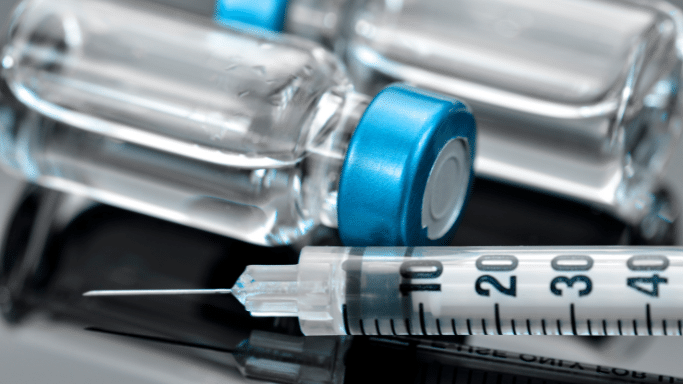
- Injections are administered subcutaneously once per week, consistent with Semaglutide and Cagrilintide injection protocols.
(NOTE: If you need a refresher on reconstitution and injection technique before starting, my peptide reconstitution guide covers everything on mixing, dosing, and storage)
There’s one more critical detail from the REDEFINE data most people miss: Only 57.3% of CagriSema patients reached the highest dose by 68 weeks, compared to 82.5% for Cagrilintide monotherapy and 70.2% for Semaglutide monotherapy.
Some individuals will fare better with a slower and more flexible dose escalation protocol.
Furthermore, the investigators were allowed flexibility in dose adjustments to balance efficacy and tolerability.
All of this is to say the following: Do NOT let ego or impatience override what the data is telling you about dose titration pacing!

The Mechanism Behind CagriSema Dosing: Why Titration Matters
If it’s not obvious yet, the sole reason why you cannot rush this titration is because of the gastrointestinal side effects taking place at a greater frequency and severity at higher doses.
Both agents penetrate the central nervous system and act on brainstem and hypothalamic circuits that regulate hunger, satiety, and caloric intake.
When you load these pathways too aggressively, the GI system registers the deceleration of gastric emptying as distress before the brain fully recalibrates its hunger set point.
The weight loss produced by CagriSema or any of its components comes primarily from reduced caloric intake.
You will NOT experience any meaningfully increased energy expenditure with either agent, according to both molecular pharmacology and animal model data.
So as I always say, start at a low dose and go up slowly when it is necessary to do so.

CagriSema Side Effects, Risks, and What to Watch For
Every intervention has tradeoffs, and in the context of CagriSema, you deserve to know exactly what they are.
Gastrointestinal adverse events occurred in approximately 79.6% of CagriSema patients versus about 40% with placebo.
The most common events were nausea (55%), constipation (30.7%), and vomiting (26.1%).
Fortunately, most of them were mild to moderate in severity and occurred primarily during dose escalation.
What really matters is this: No new safety signals were identified with CagriSema beyond the known effects observed with existing GLP-1 and amylin receptor agonist.
Nor was there any instances of severe hypoglycemia reported.
And overall discontinuation rates due to adverse events were low at 5.9% for CagriSema (vs 3.5% for placebo).
Critical Gaps in Evidence You MUST Understand
Long-term cardiovascular outcomes for CagriSema specifically are NOT yet established.
Semaglutide alone has demonstrated cardiovascular benefits, but the same data for CagriSema is still pending from ongoing trials.
Optimal dosing in special populations, including those with renal impairment and older adults, has not been adequately studied.
No completed meta-analyses exist just yet, as the current evidence comes from Phase 1-3 trial data only.
There have also been no major unexpected safety signals reported date, including no consistent imbalances in pancreatitis cases and no severe hypoglycemia in non-insulin users.
While all of this is reassuring, we still require more data to pass full clinical oversight.

Common CagriSema Dosing Mistakes to Avoid
The most common mistake people make with CagriSema dosing is front-loading the dose to accelerate results.
A surefire guarantee for severe nausea, forcing premature discontinuation while accomplishing nothing except wasting money an expensive compound and weeks’ worth of progress.
The second mistake is treating CagriSema as interchangeable with Semaglutide, applying the same dosing schedule without accounting for the added amylin receptor burden on gastrointestinal tolerance.
The third mistake is ignoring your glycemic status before and during use.
As I noted earlier, CagriSema improves HbA1c meaningfully in people with Ttype 2 diabetes beyond what Semaglutide alone achieves.
But for anyone with impaired glucose regulation, metabolic monitoring is non-negotiable to ensure you’re on the right track.

Where CagriSema Fits in Your Optimization Stack
Long-time followers know I’ve been ALL IN on Retatrutide as the gold standard for metabolic optimization peptides.
As of right now, nothing changes this stance.
Retatrutide’s triple-receptor approach (GLP-1 + GIP + glucagon) delivered 28.7% weight loss in Phase 3 and addresses energy expenditure in ways that neither Semaglutide, Cagrilintide, or even Tirzepatide are capable of doing.
But the CagriSema data proves a principle I’ve been preaching about for decades: MULTI-PATHWAY interventions outperform single-pathway approaches.
The future of metabolic optimization isn’t about picking one peptide and hoping for the best.
Rather, the spoils will go to the biohackers who understand receptor pharmacology well enough to create synergistic protocols that produce results the sick-care system told you were impossible.
As of this writing, CagriSema has an NDA filed with the FDA as of late 2025 and a review is expected sometime in 2026.

Your Responsibility as a Fully Optimized Human
CagriSema represents one of the most mechanistically sophisticated weight loss and metabolic optimization tools to emerge in this class of therapeutics, and the Phase 3 data is genuinely impressive.
But YOU are responsible for understanding what you are putting into your body, actually using CagriSema properly via a gradual dose titration protocol, and monitoring your results consistently.
Do not outsource your health decisions to trend-chasers or uninformed sources selling compounds they do not understand.
And don’t rely on the system either, because they’ll never hand you this information out of their own free will.
So long as they continue to suppress the truth, I will always have a reason to exist.
Isn’t It Time You Became Fully Optimized To Live Leaner, Longer and Stronger?
Join my #1 online membership group, Fully Optimized Health to receive guidance from me and an elite group of more than 700 male and female biohackers (who all started out just like you)
And don’t forget to check out our other premium educational content dedicated to helping you fully optimize your health:
Quantum Peptides – the A-to-Z system for anyone (newbies & pros alike) desiring to master peptide use for the first time and forever.
Quantum Testosterone – the A-to-Z system for Men & Women to learn to optimize their hormones for explosive energy, lean muscle, and timeless vitality.
The Ultimate GLP-1 Video Masterclass – how to PROPERLY utilize the world’s most powerful weight loss drugs for enhanced fat loss and overall longevity.
The Modern Woman’s Peptide Course – a must-have resource for any woman seeking to become more feminine, sexier, leaner, and healthier through the use of peptides.
Life Enhanced – Unlock the secrets to TOTAL Mind-Body-Spirit Optimization as Hunter Williams and I teach you how to live at the tip of the spear.
30 Days 2 Shredz – Reprogram Your Mind and Body for Maximum Fat Loss in Minimum Time with our Optimized Fasting Protocol
Monica Campbell’s 3 Day PMF Video Training Program – Ignite unbreakable strength, sculpt lean muscle, and conquer workouts fearlessly with my wife Monica’s 3 Day Video training course.
Positive Muscle Failure Video Training Program – Learn how to lift weights correctly for maximum muscle in minimum time while building the physique of your dreams.
See you on the inside!