 Written by Jay Campbell





[Disclaimer: This article is for educational purposes only. Always consult with a qualified healthcare provider before starting any peptide protocol.]
If you’ve experienced redness, itching, or welts after injecting peptides… chances are you’re not alone.
But before you start blaming the peptide itself or who you got it from, the culprit is most likely your system being reactive.
I’ve been using therapeutic peptides for years, and I’ve seen this pattern play out thousands of times across beginner-level and advanced-level peptide users.
Most injection site reactions are completely manageable once you understand what’s actually happening at the cellular level and how to prevent it.
In this article, I AM going to break down the science behind peptide injection site reactions.
You’ll discover exactly which peptides are responsible for triggering your mast cells, and what field-tested protocols you can use to prevent them from happening.
Finally, you’ll learn the critical difference between normal reactions and the red-flag signs that require immediate medical attention.
What You Need to Know
- Most peptide injection site reactions are histamine-mediated mast cell responses, rather than true allergies
- Your reactivity depends on various factors such as DAO enzyme levels, gut health, estrogen status, and nutrient deficiencies
- Certain injectable peptides (GHK-Cu, MOTS-C, Ipamorelin, BPC-157, GLOW protocol) are more likely to trigger mast cell degranulation
- Five strategies prevent most reactions: Aggressive dilution, slow injection with rotation, Benadryl cream pre-treatment, proper hygiene, and KPV as insurance
- Red flags requiring urgent care include: Spreading redness beyond 5 cm, severe pain, fever, pus, skin necrosis, or systemic allergic symptoms
- Addressing root causes (i.e. gut health, hormones, nutrients) reduces long-term reactivity
Peptide Injection Site Reactions: The Mast Cell Connection
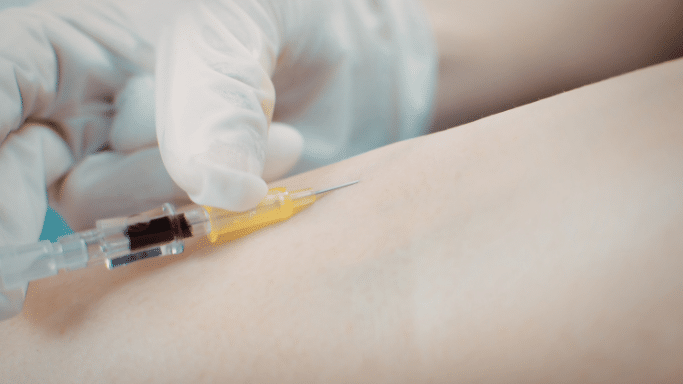
Here’s what’s really happening when you inject a peptide and immediately see itchiness, redness, and swelling up at the injection site.
Your body has immune cells called mast cells packed with histamine granules.
When you inject certain peptides subcutaneously, these peptides trigger “degranulation,” where your mast cells dump their histamine payload into surrounding tissue.
This histamine release causes everything you’re experiencing: Itching, redness, swelling, anxiety, flushing, and raised welts.
In other words, you’re fighting a localized histamine storm at the injection site.
Here’s where most people get confused: This is NOT a true allergic response.
Research shows this is a pseudo-allergic reaction mediated through the MRGPRX2 receptor on mast cells.
Your mast cells are being triggered by the peptide or formulation components, and not by an IgE-mediated immune response.
This distinction matters because you can often continue using the peptide with proper management.
What Normal Reactions Look Like
Across large studies of injectable biologics, typical benign reactions include:
- Mild redness confined to 2-3 cm around the injection site
- Slight swelling or firmness (small lump or wheal under skin)
- Tenderness or itching improving within hours to two days
- Minor bruising or pinpoint bleeding
- Timeline: Onset within minutes to 24 hours, peaking by 24 hours, followed by improvement
Clinical data shows these reactions occur in 25-45% of injections for some formulations and usually resolve within 1-3 days with simple care.
A meta-analysis of 16 biologics found that while injection site reaction rates ranged from 0.8-15.5%, treatment discontinuation was extremely rare.
In 39 of the 48 studies examined, zero patients stopped therapy solely because of injection site reactions.
So don’t freak out and stop an effective peptide protocol just because you’re getting localized reactions.
Instead, fix the underlying issue causing your reactivity.
Why Some People React to Injectable Peptides (And Others Don’t)
Five major factors determine your histamine reactivity and by extension your seemingly unusual sensitivity to peptide injections:
Low DAO Enzyme Levels
DAO (diamine oxidase) breaks down histamine in your body.
Low DAO levels mean histamine accumulates and you become hyperreactive to anything triggering mast cell degranulation.
Insufficient DAO commonly occurs with gut inflammation, certain genetic variants, or medications that inhibit DAO activity.
Therefore, supporting DAO function becomes critical for reducing peptide reactivity.
Leaky Gut and Gut Inflammation
When your gut lining is damaged, undigested proteins and bacterial components leak into your bloodstream, priming your immune system for overreaction.
As a result, your mast cells become hypervigilant and trigger-happy.
Research confirms baseline inflammation drives mast cell sensitivity, which means you have to fix the gut if you want to reduce the reactions.
High Estrogen Levels
Estrogen increases both mast cell density and reactivity.
Women often experience more injection site reactions than men, and men with elevated estradiol levels see increased reactivity.
If you’re prone to peptide reactions, checking your estradiol levels is essential.
Especially if you are a man who is already using testosterone optimization therapy (TOT).
Nutrient Deficiencies
Your body needs specific nutrients to metabolize histamine:
- Vitamin C acts as a natural antihistamine and supports DAO function
- Vitamin B6 is required for DAO synthesis and histamine breakdown
- Magnesium stabilizes mast cells and reduces degranulation
- Zinc modulates immune function and mast cell activity
Ironically, copper deficiency can worsen mast cell reactions, even when injecting the copper peptide GHK-Cu.
Stacking Too Many Peptides Too Quickly
Each additional peptide is another trigger for potential mast cell activation. The cumulative effect creates systemic reactivity that wouldn’t occur with a single peptide dosed appropriately.
Test individual peptides, establish baseline reactivity, address root causes, then progress to combinations.
Peptides That Commonly Trigger Localized Reactions
It’s not that these peptides are problematic. Your system is just reactive to them.
GHK-Cu (Copper Peptide)
GHK-Cu is one of the most frequently reported peptides for injection site reactions.
That’s because the copper component can directly trigger mast cell activation.
Use 3mL of bacteriostatic water, or even 4mL, instead of 2mL.
Pre-treat the injection site with Benadryl cream and keep KPV on standby.
The GLOW Protocol (GHK-Cu + BPC-157 + TB-500)
The GLOW protocol can be particularly reactive because you’re stacking two known histamine triggers (GHK-Cu and BPC-157) on top of TB-500.
The strategic approach for GLOW should be the following:
- Test each peptide individually first before using a vial containing all 3 peptides mixed together
- Use 3-4mL dilutions minimum, with strict 1-2 cm spacing rotation
- Pre-treatment with Benadryl cream is essential for this stack
- If you get welts or significant inflammation, inject 500mcg KPV immediately at a different site
BPC-157
BPC-157 shows significant individual variation.
Some inject it for months without issues, while others get immediate inflammation, redness, and itching at every site.
Mild redness and warmth resolving within 24-48 hours is likely therapeutic inflammation.
Persistent welts, severe itching, and worsening reactions indicate mast cell activation requiring further medical intervention.
MOTS-C and Mitochondrial Peptides
MOTS-C can trigger localized burning, redness, and occasional systemic flushing.
The same dilution and pre-treatment strategies that work for GHK-Cu apply here.
L-Carnitine
Injectable L-Carnitine is notorious for causing localized burning, redness, and welts in reactive individuals.
When you stack it with peptides like MOTS-C or GHK-Cu, you’re compounding the reactivity.
Growth Hormone Secretagogues
Ipamorelin, CJC-1295, and other GH-releasing peptides can trigger localized responses.
Research shows injection-site reaction rates typically fall in the 3-10% range.
However, reactions tend to be milder than those seen with GHK-Cu or MOTS-C.
GLP-1 Receptor Agonists (Semaglutide, Tirzepatide)
A meta-analysis found GLP-1 receptor agonists carry a 3.55-fold increased risk of injection site reactions compared to controls.
Extended-release formulations using microsphere depot technology are particularly problematic, with injection site nodule rates hovering around 10%.
A case report documented quarter-sized, hard, erythematous nodules appearing within minutes of a Semaglutide injection.
When the patient switched to Dulaglutide, the nodules completely disappeared.
Long story short: If you’re using Semaglutide or Tirzepatide for fat loss, injection technique and site rotation become absolutely critical.
My 5 Practical Strategies to Prevent Peptide Reactions
These are field-tested protocols I’ve developed over years of personal peptide use, and from helping thousands optimize their injection technique.
Strategy #1: Dilute More Aggressively
Most people reconstitute their peptides with 2mL of bacteriostatic water.
Instead, start with a larger injection volume of 3mL or more.
Believe it or not, the concentration-response relationship with histamine reactions is real.
Some evidence suggests reducing the peptide’s concentration significantly decreases mast cell activation.
For particularly reactive peptides like GHK-Cu or MOTS-C, I use 3-4ml dilutions without hesitation.
Use my FREE peptide reconstitution calculator to adjust the dosing for higher dilution volumes.
Strategy #2: Inject Slowly and Rotate Sites Religiously
Injection speed matters, believe it or not.
Research confirms a slow, steady subcutaneous injection done over several seconds reduces both pain and inflammatory response.
As a rule of thumb, take 10-15 seconds for typical injections.
But here’s the critical factor that often gets missed: Regularly rotating injection sites.
Evidence from insulin studies shows proper rotation reduces lipohypertrophy odds by 6-8 fold.
My exact rotation protocol is as follows:
- Divide injection zones into quadrants: abdomen (four sections), outer thighs (two zones per leg), upper glutes (two zones per side)
- Space injections 1-2 cm apart within each quadrant (based on clinical evidence)
- Rotate to different quadrant each injection using weekly schedule
- Never inject into lumpy, hard, scarred, or discolored tissue
Data shows people who don’t rotate injection sites properly have lipohypertrophy rates over 80%, while those who frequently rotate sites see rates around 25-30%.
Learn everything you must know about proper injection technique in my Reconstitution Course.
Strategy #3: Pre-Treat the Area with Benadryl Cream
Here’s what you should do:
- Fill the syringe and bring it to room temperature (15-30 minutes before injection, as cold solutions increase pain)
- Apply Benadryl cream to the chosen injection site
- Wait one minute for the topical antihistamine to penetrate
- Clean the site with alcohol swab and inject through the treated area
The Benadryl acts to create localized antihistamine environment that blunts mast cell degranulation.
Personally, I prefer using the upper glutes for reactive peptides.
Strategy #4: Practice Impeccable Hygiene
- Use a new sterile needle every time (needle reuse increases trauma)
- Alcohol swab EVERYTHING: vial stoppers, injection site, syringe hub
- Allow the alcohol to dry completely (as wet alcohol under skin burns)
- Store reconstituted peptides properly: Refrigerated, away from light, discard after recommended timeframe
For compounded and/or research-use only peptides, sterility becomes even more critical.
Strategy #5: Use KPV as Your Insurance Policy
KPV is a tripeptide that inhibits mast cell degranulation.
Research demonstrates KPV blocks the inflammatory cascade by inhibiting the NF-κB pathway (the master inflammatory switch).
Furthermore, KPV shuts down the histamine response almost immediately.
How I use KPV in the context of addressing injection site reactions:
- Keep reconstituted KPV available when injecting reactive peptides
- If you get welts, redness, or significant itching, immediately inject 500mcg KPV subcutaneously at a different site
Reactions that would typically last 2-3 days can completely resolved within hours when KPV is administered promptly.

Address the Root Cause for Long-Term Success
Before injecting more peptides, fix the underlying issues making you reactive to them.
Support DAO Enzyme Function
- Vitamin C: 1000-2000mg daily (natural antihistamine, supports DAO synthesis)
- Vitamin B6: 50-100mg daily as pyridoxal-5-phosphate (required for DAO production)
- Copper: 1-2mg daily (even for reactions due to using GHK-Cu, adequate copper status is necessary for DAO function)
Some people may benefit from direct DAO enzyme supplementation (derived from pork kidney) taken 15-30 minutes before meals.
Fix Your Gut Health
The connection between intestinal permeability and immune hyperreactivity is well-established.
When your gut barrier is compromised, undigested proteins leak into circulation and trigger antibody formation, followed by mast cells becoming primed and hypersensitive.
My recommended gut healing protocols are as follows:
- Remove inflammatory triggers: Gluten, processed seed oils, excess alcohol, NSAIDs
- Support gut barrier function: L-glutamine (5-20g daily), zinc carnosine (75-150mg twice daily), collagen peptides
- Optimize the microbiome: High-quality probiotics, fermented foods, prebiotic fiber
- Address underlying infections: SIBO, candida overgrowth, and parasites if they are present
This may take a few months, but the payoff extends far beyond reducing peptide site reactions.
Optimize Your Hormones
If you’re male and experiencing frequent reactions, check your estradiol levels.
High E2 readings (>40-50 pg/mL for most men) are correlated with an increase in mast cell density and reactivity.
You want E2 within an optimal range (typically 20-40 pg/mL for men) where you can get its cognitive and cardiovascular benefits without mast cell hyperreactivity.
For women, estrogen fluctuations throughout the menstrual cycle impact peptide reactivity.
Many report worse reactions during high-estrogen phases, so time the injections of reactive peptides around your low-estrogen phases (i.e. early follicular).
Address Nutrient Deficiencies
Get comprehensive micronutrient testing: RBC magnesium, zinc, B vitamins, vitamin C, and copper are great places to start.
- Magnesium: 400-600mg daily (as glycinate or threonate) stabilizes mast cells
- Zinc: 30-50mg daily (with 2-3mg copper) modulates immune function
- B-complex: Especially Vitamins B6 (as P5P) and B12 (as methylcobalamin), which support histamine breakdown
Most people notice reduced peptide reactivity within 4-8 weeks of systematically addressing these root causes.

Severe Reactions You Can’t Ignore
Most injection site reactions are benign and self-limited, but certain reactions require immediate medical attention.
Signs of Infection (Cellulitis or Abscess)
- Progressive worsening after 24-48 hours instead of improvement
- Spreading redness beyond 5 cm that continues enlarging
- Marked warmth, throbbing pain, or pain that is severe and out of proportion
- Purulent drainage (pus), central necrotic/black area, or obvious abscess
- Fever, chills, malaise, or systemic symptoms
- Red streaking running up limb toward lymph nodes
These require urgent medical evaluation for potential antibiotics, drainage, or both.
Understanding the potential side effects of peptide injections and when you should seek help is mandatory for successful peptide use.
Serious Vascular Complications (Nicolau Syndrome)
This pertains to a rare but devastating ischemic necrosis following injection.
The classic presentation of this condition is as follows:
- Intense immediate pain at injection
- Livedoid discoloration (mottled, dusky appearance)
- Rapid ecchymosis (bruising)
- Blistering and eventual skin necrosis
This requires emergency specialist care.
Systemic Allergic Reactions (Anaphylaxis)
Her are some warning signs requiring immediate emergency services:
- Generalized urticaria (hives) or widespread itching beyond injection site
- Swelling of lips, face, tongue, or throat
- Shortness of breath, wheeze, chest tightness, difficulty breathing
- Dizziness, lightheadedness, syncope
- Rapid heart rate with pallor, collapse, or hypotension
Call 911 immediately, as anaphylaxis requires epinephrine and emergency care.
While they are rare, severe reactions to peptides can occur and require immediate professional intervention.
Persistent Nodules and Granulomas
These are not medical emergencies, but they do warrant evaluation if they persist beyond 2-4 weeks and/or are progressively enlarging.
Studies of depot formulations describe firm, sometimes tender nodules developing over weeks to months.
These are typically foreign-body granulomas.
If you develop persistent lumps:
- Avoid injecting in that area until nodule resolves (often 3-6 months)
- Consider ultrasound imaging if large, painful, or growing
- Dermatology consultation may be warranted for biopsy if diagnosis uncertain
Building Your Peptide Stack the Smart Way
Most injection site problems stem from trying to do too much, and too fast.
The Methodical Approach
- Phase 1 (Weeks 1-4): Run your first peptide all by itself at the target dose, establishing you can tolerate it well.
- Phase 2 (Weeks 5-8): Add a second peptide while continuing the first one, while initially using separate injection sites for each peptide.
- Phase 3 (Weeks 9-12): Add a third peptide if desired, continuing proper injection site rotation and monitoring.
- Phase 4 (Weeks 13+): Consider complex combinations like the GLOW protocol ONLY after confirming you can tolerate each individual component.
Keep a log of injection sites, reactions, and severity… this data will become invaluable when troubleshooting.
If you have concerns about your protocol, consult your healthcare provider for personalized guidance.
When to Push Forward vs. Pull Back
Push forward when:
- Mild reactions start to improve over 24-72 hours
- The therapeutic benefits outweigh minor injection site discomfort
- Your reactions to the peptide(s) stabilize or decrease as you build tolerance
- You’ve optimized injection technique and addressed the root causes of your reaction(s)
Pull back when:
- Reactions start worsening with each injection
- You begin to develop persistent nodules, granulomas, or tissue changes
- Systemic symptoms appear (fever, malaise, widespread rash)
- Injection site issues impair quality of life and/or cause significant anxiety

The Bottom Line: You Can Use These Peptides
Histamine reactions don’t disqualify you from peptide therapy.
All they mean is you have to take a few precautions first.
Most people experiencing injection site reactions can successfully continue their dosing protocols by:
- Optimizing injection technique: Aggressive dilution (3mL+), strict rotation (1-2 cm spacing), slow injection, room temperature peptides, 4mm needles
- Pre-treating reactive injections: Benadryl cream applied one minute before injection
- Keeping KPV as insurance: 500mcg immediately after reactive injections
- Addressing root causes: Healing gut, supporting DAO levels, optimizing estradiol readings, correcting nutrient deficiencies
- Taking methodical approach to stacking: Testing individual peptides before combining, building tolerance progressively
Research across thousands of patients confirms that treatment discontinuation due to injection site reactions is extremely rare.
In most clinical trials, zero patients stopped therapy solely because of local reactions.
The therapeutic benefits of peptides for muscle growth, fat loss, injury recovery, and anti-aging are too significant to abandon because of manageable injection site issues.
Fix the foundation. Master the technique. Use the tools. Build your stack methodically.
That’s the path to successful long-term peptide use without chronic inflammation.
If you DO decide to explore peptides after thorough research and medical consultation, use pharmaceutical-grade sources with third-party testing.
Because just as you wouldn’t put low-grade fuel in a precision engine, you sure wouldn’t put anything less than the purest peptides in your body.
That’s why source quality and manufacturing standards matter.
I’ve personally vetted dozens of peptide suppliers, and I can tell you this without hesitation:
BioLongevity Labs sets the benchmark for authentic Khavinson-patented bioregulators, with a ruthless focus on stringent third-party testing and top-notch customer service.
They consistently deliver the highest quality products, trusted by professionals for both personal and clinical use.
Whether you’re looking to elevate your performance or integrate these products into research applications, BioLongevity Labs is a reliable source you can count on.
👉 Click here to place your online order for premium peptides 👈
Use code JayC to get 15% off your order!
I also invite you to join me and other like-minded biohackers in The Fully Optimized Health Private Membership Group.
You’ll receive guidance from myself and an elite group of more than 700 male and female biohackers (who all started out just like you).
And don’t forget to check out my premium educational content dedicated to helping you fully optimize your health:
Quantum Peptides – the A-to-Z system for anyone (newbies & pros alike) desiring to master peptide use for the first time and forever.
Quantum Testosterone – the A-to-Z system for Men & Women to learn to optimize their hormones for explosive energy, lean muscle, and timeless vitality.
The Ultimate GLP-1 Video Masterclass – how to PROPERLY utilize the world’s most powerful weight loss drugs for enhanced fat loss and overall longevity.
The Modern Woman’s Peptide Course – a must-have resource for any woman seeking to become more feminine, sexier, leaner, and healthier through the use of peptides.
Life Enhanced – Unlock the secrets to TOTAL Mind-Body-Spirit Optimization as Hunter Williams and I teach you how to live at the tip of the spear.
30 Days 2 Shredz – Reprogram Your Mind and Body for Maximum Fat Loss in Minimum Time with our Optimized Fasting Protocol
Monica Campbell’s 3 Day PMF Video Training Program – Ignite unbreakable strength, sculpt lean muscle, and conquer workouts fearlessly with my wife Monica’s 3 Day Video training course.
Positive Muscle Failure Video Training Program – Learn how to lift weights correctly for maximum muscle in minimum time while building the physique of your dreams.
See you on the inside!