

[Disclaimer: This article is for educational and informational purposes only. It is not intended to provide medical advice, diagnosis, or treatment. Always consult a qualified healthcare professional before beginning any new protocol.]
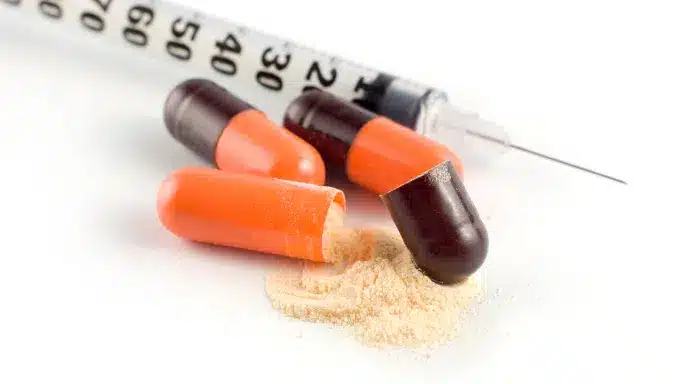
If you’re taking TB-500 in capsule form, you are probably lighting your money on fire.
I say this for reasons related to beginner-level pharmacology and bioavailability.
The peptide industry is flooded with slickly marketed oral products designed to sell comfort over results, and TB-500 capsules are one of the clearest examples of this disconnect.
TB-500 is one of the most powerful regenerative peptides I’ve seen for tissue repair and recovery, but turning it into an oral capsule while pretending it survives digestion is borderline insulting to anyone who actually understands therapeutic peptides.
Today, I’m going to break down the mechanism and pharmacokinetics of this peptide so you can administer this compound properly and start getting some serious results.
While resolving the “TB-500 capsules vs injection” debate once and for all.
Quick Takeaways
- TB-500 capsules have zero peer-reviewed evidence to prove there is any meaningful systemic absorption happening
- Injectable TB-500 bypasses the digestive tract and reliably reaches systemic circulation
- By design, your gastrointestinal tract destroys peptides
- The route of administration determines whether TB-500 works or becomes an expensive mistake
- Convenience means nothing if the active compound never reaches the target tissue
- Sourcing and purity matter as much as the delivery route

What TB-500 Actually Is
TB-500 is a synthetic fragment of thymosin beta-4 (Tβ4), a naturally occurring peptide produced in the human body.
Its primary role is to regulate actin polymerization through G-actin binding, thereby directly affecting processes such as cellular migration, tissue remodeling, recovery, and wound repair.
Beyond that, Tβ4 influences multiple regenerative signaling pathways.
- It activates ILK (integrin-linked kinase) and AKT signaling
- It increases VEGF (vascular endothelial growth factor) expression to support angiogenesis
- It enhances tissue remodeling
- It reduces inflammatory signaling through NF-κB suppression
- It lowers pro-inflammatory cytokine activity in injury models
A landmark study published in Nature demonstrated Tβ4 activates integrin-linked kinase and promotes cardiac cell migration, survival, and cardiac repair.
What we’re talking about here is a biologically active signaling molecule with clearly understood regenerative mechanisms.
If you want to understand how TB-500 compares to its close relative thymosin alpha-1, I’ve covered the distinctions in my thymosin alpha-1 vs beta-4 breakdown.
TB-500 works, but the million-dollar question is whether you can actually get it into your bloodstream and target tissues.

The Capsule Problem: Your Gut Destroys Peptides
Here’s something: most oral peptide marketers hope you never investigate.
Peptides are NOT small molecules.
They are fragile amino acid chains that your gastrointestinal tract can easily dismantle.
That process, called proteolysis, is incredibly efficient.
Research on oral peptide delivery barriers confirms peptides face three sequential destruction mechanisms in the GI tract:
- Gastric acid denaturation at pH 1.5-3.5
- Pepsin cleavage in the stomach
- Pancreatic enzymes (trypsin, chymotrypsin, elastase) in the small intestine
For context, TB-500 is a 43-amino acid peptide.
Research on peptide bioavailability confirms intact TB-500 achieves oral bioavailability below 1%, while even a truncated 4-residue fragment (Ac-SDKP) only achieves an oral uptake of approximately 30%.
That means the full-length compound in its oral capsule is being shredded into it s constituent amino acids before it ever reaches systemic circulation.
This translates to:
- Extremely poor oral bioavailability
- Minimal intact peptide absorption
- Little to no meaningful therapeutic exposure
And to make matters worse, there are currently NO peer-reviewed human trials demonstrating effective systemic delivery or therapeutic outcomes from oral TB-500 capsules.
Reflecting a biological barrier grounded in how peptide pharmacokinetics actually work.
Overwhelmingly, most peptide drugs require an injectable administration, a topical formulation, or some other specialized delivery system to be efficacious in the human body.
I’ve covered the same bioavailability principles in detail for BPC-157 in my oral vs injection comparison, and the same core science applies to nasal spray deliveries as well.

Why TB-500 Injection Is the Only Method That Works
Injections bypass the digestive system entirely, and this one difference is enough to change everything about the peptide’s effectiveness.
Subcutaneous and intramuscular administration of TB-500 allows the peptide to enter systemic circulation intact and be distributed throughout the body.
Preclinical data show meaningful accumulation at injury and inflammatory sites post-injection.
Research involving injectable Tβ4 demonstrates accelerated wound healing, with one study showing topical/intraperitoneal Tβ4 increasing re-epithelialization by 42-61% over controls in a full-thickness wound model.
Additional preclinical research demonstrates Tβ4 is the first known molecule to initiate simultaneous myocardial and vascular regeneration following systemic administration.
Further studies confirmed Tβ4 reduces infarct volume and preserves cardiac function through antifibrotic and proangiogenic activities.
And to go one step further, all the early human studies evaluating Tβ4 for wound healing focused exclusively on injectable or topical administration.
Reflecting the reality researchers already understand: Oral peptide delivery is biologically impractical as of this writing.

Capsules vs. Injection: A Direct Comparison
| Factor | TB-500 Capsules | TB-500 Injection |
| Systemic bioavailability | Extremely low (<1%) | Moderate to high |
| GI degradation | Extremely high | None |
| Evidence of efficacy | None (human or animal) | Preclinical + early human data |
| Tissue accumulation | Not demonstrated | Demonstrated in animal models |
| Used in clinical trials | No | Yes |
| Convenience | Higher | Requires preparation |
The conclusion from this table should be obvious:
There is no scenario, at the moment, in which capsules offer pharmacological performance comparable to injection for a peptide of this size and structure.

Common TB-500 Mistakes That Kill Your Results
I’ve spoken with countless men and women who used oral TB-500, felt absolutely nothing, then concluded the peptide itself was junk.
These same people fail to realize it was their choice of delivery system that ultimately failed them.
Here are some other commonly-made mistakes in this regard:
- Choosing convenience over bioavailability
- Assuming higher oral doses can compensate for poor absorption
- Buying TB-500 from unverified peptide vendors with questionable manufacturing standards
- Expecting therapeutic effects without systemic exposure
- Confusing marketing claims with pharmacokinetic reality
And let’s be honest with each other: The peptide space still operates largely in a regulatory gray zone.
That means quality, purity, sterility, and manufacturing standards vary dramatically across both oral and injectable products… and across vendors too.
This is why I’ve spent years advocating for access to high-quality, properly manufactured peptides while fighting against the regulatory moves that threaten to restrict them.
If you want to understand the bigger picture of what’s happening on the regulatory front, I’ve covered the war on peptides extensively in the past
And for the readers who are new to peptides and worried about injection protocols, proper subcutaneous injection technique is far simpler than most people fear.
In fact, I’ve created an entire reconstitution course to help eliminate the confusion and anxiety surrounding the injection of therapeutic peptides.
A Bright Spot for the Injection Fearing?
Realistically speaking, I AM fully ware most people do NOT want to inject anything into their bodies.
The good news for the needle-phobes is researchers are making rapid advancements in the science of oral peptide delivery.
There is some serious progress happening with formulation strategies like enzyme inhibitors, permeation enhancers, mucoadhesive polymers, and fragment-based optimization that may dramatically improve oral bioavailability in the coming years.
Gains WILL be made, but we’re not there yet for a 43-amino acid peptide like TB-500.
But until we get there, injections are still the only delivery route with solid evidence behind it.
When the science catches up to the convenience, I’ll be the first to tell you.
In the meantime I WILL NOT recommend something that doesn’t work just because it’s easier to use.

Stacking TB-500 for Maximum Results
Long-time followers know TB-500 is rarely used by myself.
The most effective healing protocols stack it with complementary peptides that amplify its regenerative mechanisms.
As an example, the BPC-157/TB-500 combination is the gold standard for healing and recovery.
BPC-157 works through distinct but complementary pathways, and running both together produces results unachievable by either peptide used in isolation.
I’ve covered BPC-157 in depth, discussing important information such as the research backing its use and how to dose it properly.
For more advanced healing protocols, the GLOW stack (GHK-Cu, BPC-157, TB-500) layers in GHK-Cu’s benefits for skin & tissue remodeling, while the KLOW stack (adding KPV) taps into KPV’s anti-inflammatory properties for gut and systemic inflammation.
I’ve compared these stacks head-on in my GLOW vs KLOW breakdown.

TB-500 Safety Risks You Need to Understand
Injectable thymosin beta-4 has demonstrated relatively good tolerability in early-stage human research.
However, long-term systemic use remains insufficiently studied.
Anyone using TB-500 should understand exactly where the science ends and the speculation begins.
One legitimate theoretical concern involves the promotion of angiogenesis.
Because Tβ4 promotes blood vessel formation and regenerative signaling, there is a mechanistic argument suggesting it could potentially support tumor progression in individuals with existing malignancy.
The evidence base for this claim remains limited and inconclusive.
But serious optimizers don’t ignore mechanistic risk simply because it’s inconvenient to talk about.
If you have a personal or family history of cancer, this conversation belongs with a qualified physician before touching TB-500.

The Bottom Line on TB-500 Administration
If you want TB-500 to produce meaningful systemic effects, injections are currently the only evidence-supported delivery route.
Capsules have no pharmacokinetic or clinical outcome data supporting their use as an effective systemic therapy.
So in this regard, convenience becomes biologically irrelevant.
If TB-500 never reaches circulation, it cannot do all the things it’s supposed to do:
- Actin-mediated cell migration
- Activation of regenerative signaling pathways
- Reduction of inflammatory cytokines
- Supporting tissue remodeling
- Accumulation in injured tissue
In other words, it cannot do the very things people buy TB-500 for in the first place.
I only ask this of you: Stop letting marketing departments override common sense and biological reality.
The peptide industry is full of companies that will happily sell you convenience at the expense of efficacy.
That is the same predatory playbook the mainstream supplement industry has been running for decades, except their old tricks have been repackaged with scientific-sounding language and a different delivery vehicle.
If you want to learn more about common peptide mistakes people make, how to properly cycle different peptides, or how to handle injection site reactions… I’ve covered all of it on my website for free.
Before you put another capsule in your mouth, ask yourself one simple question:
Does this delivery method actually make biological sense?
Because in the world of peptides, the route of administration dictates everything.
Isn’t It Time You Became Fully Optimized To Live Leaner, Longer And Stronger?
Join my #1 online membership group, Fully Optimized Health to receive guidance from me and an elite group of more than 700 male and female biohackers (who all started out just like you)
And don’t forget to check out our other premium educational content dedicated to helping you fully optimize your health:
Quantum Peptides – the A-to-Z system for anyone (newbies & pros alike) desiring to master peptide use for the first time and forever.
Quantum Testosterone – the A-to-Z system for Men & Women to learn to optimize their hormones for explosive energy, lean muscle, and timeless vitality.
The Ultimate GLP-1 Video Masterclass – how to PROPERLY utilize the world’s most powerful weight loss drugs for enhanced fat loss and overall longevity.
The Modern Woman’s Peptide Course – a must-have resource for any woman seeking to become more feminine, sexier, leaner, and healthier through the use of peptides.
Life Enhanced – Unlock the secrets to TOTAL Mind-Body-Spirit Optimization as Hunter Williams and I teach you how to live at the tip of the spear.
30 Days 2 Shredz – Reprogram Your Mind and Body for Maximum Fat Loss in Minimum Time with our Optimized Fasting Protocol
Monica Campbell’s 3 Day PMF Video Training Program – Ignite unbreakable strength, sculpt lean muscle, and conquer workouts fearlessly with my wife Monica’s 3 Day Video training course.
Positive Muscle Failure Video Training Program – Learn how to lift weights correctly for maximum muscle in minimum time while building the physique of your dreams.
See you on the inside!