
 Written by Jay Campbell




[Disclaimer: This article is for educational purposes only. Always consult with a qualified healthcare provider before starting any peptide protocol.]
The peptide world is drowning in hype, and most people using peptides have no idea which ones actually work for restoring hormone balance.
I’ve spent three decades testing, researching, and working directly with the world’s leading clinicians on therapeutic peptides.
And one thing I can say for sure is most of what’s being sold online is completely misunderstood by biohackers.
The good news?
There are a number of peptides with solid mechanistic backing AND clinical evidence showing they genuinely correct hormone imbalance and restore hormonal function.
The bad news?
You’ve probably never heard the truth about how they actually work… especially when it comes to the reproductive hormone axis.
This article will break down exactly which peptides move the needle on hormone optimization, why they work at the receptor level, and how to think about them strategically instead of throwing darts at a board full of three-letter abbreviations.
We’re going to pay special attention to the fertility and reproductive signaling peptides that most people overlook entirely.
Because that’s where some of the most powerful (and most misunderstood) tools in the peptide space actually reside.
Quick Takeaways
- Most peptides for “hormone balance” work by activating G protein-coupled receptors (GPCRs), triggering second messenger cascades that amplify hormonal signals.
- Reproductive-axis peptides like Kisspeptin, Gonadorelin, and Triptorelin directly influence LH and FSH signaling, making them critical tools for testosterone optimization and fertility.
- HCG and HMG are technically peptides but are regulated as controlled biologics; understanding their legal and clinical status is essential before considering them.
- Growth hormone secretagogues like Sermorelin, Ipamorelin, and MK-677 have strong evidence for the restoration of anabolic hormone function.
- Peptide bioregulators like Testagen and Thymalin represent an upcoming category of therapeutics with promising mechanisms but extremely limited published data.

Why “Hormone Balance” Is a Meaningless Term Without Context
Let’s start by defining our terms clearly and succinctly.
When most people talk about “hormone balance,” they usually mean one of the following:
- Restoring declining growth hormone and IGF-1
- Improving insulin sensitivity and metabolic signaling
- Modulating testosterone and fertility pathways
- Influencing immune and inflammatory signaling
- Looking to boost energy levels and combat chronic fatigue
But here’s what I want to challenge in this article…
The term “hormone balance” is SO all-encompassing it becomes almost useless unless you define which hormonal axis you’re targeting — and which specific peptides address that axis.
And one of the most important axes — the hypothalamic-pituitary-gonadal (HPG) axis that controls testosterone production, fertility, and reproductive signaling — is routinely ignored in any discussion about peptides.
Remember: peptides are signaling molecules that bind to specific receptors and activate downstream pathways.
If you don’t understand the receptor you’re targeting, the signaling cascade(s) that follows, and the expected physiological outcome(s), you’re flying blind.
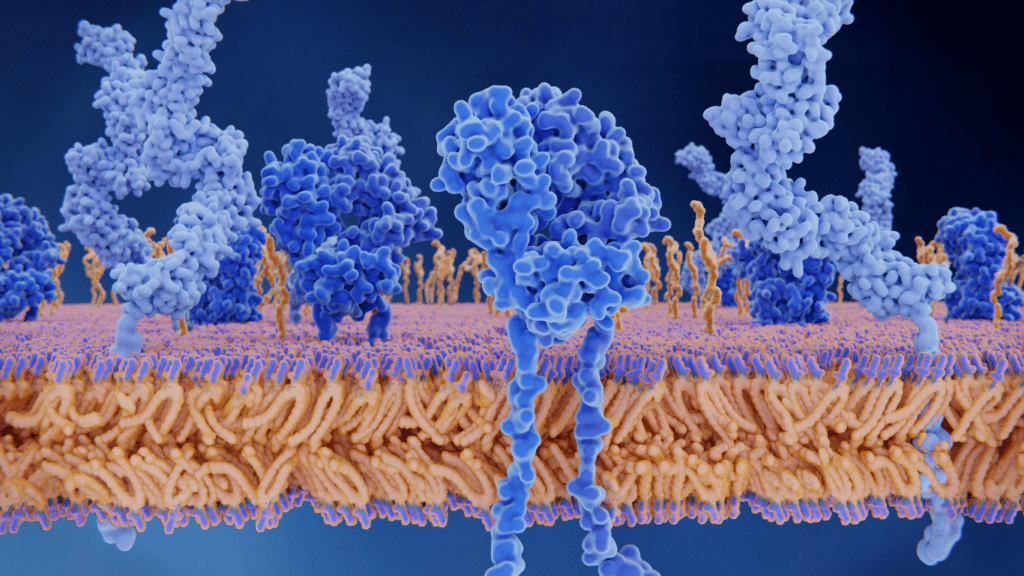
The peptides that actually work for hormone optimization do so because they bind to G protein-coupled receptors (GPCRs), which are the single most important class of cell-surface receptors in human physiology.
The Mechanism That Matters: GPCR Signaling
Peptide hormones bind to GPCRs on the cell surface, triggering second messengers like cAMP, IP3/DAG, or cGMP that amplify the signal inside the cell.
This is how a tiny amount of a peptide in circulation can produce massive physiological changes.
Family B GPCRs (which include receptors for GLP-1, PTH, and growth hormone-releasing hormone) use a two-step binding process:
- High-affinity interaction with the receptor’s N-terminal domain
- C-terminal activation of the transmembrane domain to couple with G proteins
This sequence of events is exactly why peptides like Sermorelin and Semaglutide actually work when dosed correctly.
And it’s the SAME class of receptor signaling that makes reproductive-axis peptides like Kisspeptin and gonadorelin so powerful.
They activate GPCRs on GnRH neurons and pituitary gonadotrophs, directly controlling the release of LH and FSH.
If a peptide doesn’t bind a validated receptor with a clear downstream pathway, it’s not going to do anything for your hormonal health.

Reproductive-Axis Peptides: The Most Overlooked Category
This topic is where I want to spend a good deal time, because it’s the category of peptide therapeutics most people are sleeping on.
If you care about testosterone, fertility, or preserving your HPG axis function (especially while on TRT or coming off it), you MUST know about these peptides!
Peptide therapy designed to target the reproductive axis is one of the most underutilized tools available to men dealing with declining hormones.
And it’s also one of the most misrepresented categories in the entire field.
Kisspeptin
Kisspeptin is arguably the master regulator of the entire reproductive hormone cascade.
It’s a neuropeptide that binds to the KISS1R receptor (also called GPR54) on GnRH neurons in the hypothalamus, and it’s the primary upstream signal that tells your brain to initiate LH and FSH release.
Without adequate Kisspeptin signaling: GnRH fails to pulse properly, LH levels drop, and testosterone production falls off a cliff.
This is why Kisspeptin is generating serious interest in fertility medicine.
Clinical research has demonstrated Kisspeptin administration can stimulate robust LH pulses in both men and women.
This may make it a useful tool for:
- Restoring natural testosterone production
- Improving fertility outcomes
- Addressing hormonal dysregulation in women going through menopause
I’ve been watching this peptide closely for years, and the mechanistic use case is rock-solid.
The challenge is sourcing Kisspeptin and refining its dosing protocols, which are still under investigation in clinical settings.
Gonadorelin
Gonadorelin is a synthetic analog of gonadotropin-releasing hormone (GnRH) that mimics the pulsatile signaling your hypothalamus uses to communicate with the pituitary.
When administered in the right dosing pattern, gonadorelin binds GnRH receptors on pituitary gonadotrophs and stimulates the release of both LH and FSH.
This matters enormously for men on testosterone replacement therapy (TRT), and for anyone using any type of hormone replacement therapy (HRT).
TRT shuts down your HPG axis –> your pituitary stops producing LH –> your testes stop receiving the signal to make testosterone and sperm.
Without that signal, natural production of testosterone grinds to a halt.
Gonadorelin can help maintain that signaling pathway while you’re on exogenously-administered testosterone, thereby preserving testicular function and fertility.
I’ve recommended Gonadorelin protocols to hundreds of men on TRT, and the clinical rationale is straightforward: Keep the receptor active and you can keep the signaling pathway alive.
Triptorelin
Triptorelin is a GnRH agonist, but it works differently than Gonadorelin does.
When given as a single dose or in pulsatile fashion, Triptorelin initially stimulates a “flare effect” that involves a massive surge of LH and FSH.
However, with continuous administration, it actually desensitizes GnRH receptors and suppresses LH/FSH (which is why it’s used in prostate cancer treatment and certain fertility protocols).
But here’s why triptorelin is relevant to this conversation…
A single, carefully-dosed injection of triptorelin has been used clinically to restart the HPG axis in men coming off anabolic steroids or long-term testosterone use.
The flare effect produces a massive Gonadotropin surge that can essentially “reboot” a suppressed pituitary.
The dose-response curve is steep, and getting it wrong can cause prolonged suppression instead of recovery.
Yet in the right clinical context, and assuming you know what you’re doing, it’s a powerful tool.

HCG and HMG: Peptides in Legal Limbo
Human chorionic gonadotropin (HCG) and human menopausal gonadotropin (HMG) are technically peptide hormones.
HCG mimics LH signaling directly at the Leydig cells, stimulating testosterone production without requiring pituitary involvement.
HMG stimulates both LH and FSH activity, making it a dual-action tool for stimulating both testosterone and spermatogenesis.
For years, HCG was the gold standard for maintaining fertility on TRT and for post-cycle recovery.
Nowadays, HCG and HMG are now regulated as controlled biologics instead of compounded peptides.
In other words, they’re no longer available from compounding pharmacies the way they used to be.
You need a prescription for the branded pharmaceutical versions, which are significantly more expensive and harder to access.
This regulatory shift is one of the many reasons why peptides like Gonadorelin and Kisspeptin have become so important for the future of personalized medicine.
They offer alternative pathways to stimulate the same reproductive hormone cascades that HCG and HMG target, albeit through different receptor mechanisms.

Growth Hormone Pathway Peptides: The Most Proven Category
When it comes to peptide-based hormonal care, here is where the deepest body of clinical evidence lives.
Sermorelin is a growth hormone-releasing hormone (GHRH) analog that binds to GHRH receptors in the pituitary, directly stimulating growth hormone (GH) release.
A 1 μg/kg IV dose produces a rapid GH response with fewer false positives than other diagnostic tools, and it’s been validated in clinical trials for the treatment of growth hormone deficiency.
Ipamorelin is a growth hormone secretagogue peptide (GHSP) that works synergistically with Sermorelin.
When combined together, Sermorelin and Ipamorelin elevate GH levels MORE than either peptide alone, which can lead to muscle mass gain and reduction of body fat in hypogonadal males.
I’ve personally used this combination for years, and I’ve seen it work in hundreds of men who’ve followed my protocols.
MK-677 (Ibutamoren) is a ghrelin mimetic that stimulates GH secretion via the growth hormone secretagogue receptor (GHSR).
Published research in the Journal of Clinical Endocrinology & Metabolism shows it improves nitrogen balance and reverses protein catabolism.
Unlike injectable GHRPs, MK-677 is orally bioavailable, which makes it more accessible but also increases the risk of side effects such as elevated blood sugar and increased appetite.
GHRP-6 activates GH secretagogue receptors and has been safely administered in dose-escalation trials in healthy volunteers.
Beyond GH stimulation, it has demonstrated cardioprotective effects via ischemia/reperfusion restoration (a bonus effect most people don’t know about).
And here’s something critical: GHRH treatment increases nocturnal GH release and peak amplitude, enhancing muscle strength and endurance in older adults without significantly altering IGF-1 levels.
But how does it differ from growth hormone treatment?
There are a few key differences:
- Secretagogues like Sermorelin and Ipamorelin stimulate your pituitary to increase those pulses (amplifying a system that already exists), whereas exogenous growth hormone works by bypassing the pituitary and directly elevating circulating GH levels.
- Secretagogues enhance the body’s own signaling pathways, while pharmaceutical GH provides a direct hormonal input.
Both approaches can work extremely well when used strategically.
The key is understanding which tool fits the situation you’re trying to fix.

GLP-1 and Multi-Agonist Peptides: Metabolic Hormone Regulation
Now let’s talk about the weight loss peptides everyone is suddenly obsessed with.
Most people know the first generation of these compounds as GLP-1 receptor agonists.
Drugs like Semaglutide and Liraglutide activate the GLP-1 receptor, increasing cAMP signaling and improving insulin secretion.
This leads to the reduction of appetite and improved glycemic control.
But the real breakthrough is happening with multi-agonist peptides targeting more than just GLP-1 alone.
The most exciting compound in this category right now is Retatrutide, which activates three G-protein coupled receptors simultaneously:
- GLP-1
- GIP
- Glucagon
That triple signaling cascade fundamentally changes how energy metabolism is regulated because you also have increased energy expenditure and and reduction of liver fat (on top of the suppressed appetite).
This is how Retatrutide has produced some of the most dramatic results ever seen in weight loss pharmacology trials.
In human studies, subjects have lost up to 24% of body weight over 48 weeks at the highest dose of 12mg/week!
It’s a metabolic correction with a logical sequence of events to it…
- Lose visceral fat and you reduce aromatase activity
- Less testosterone converts into estradiol.
- Insulin sensitivity improves.
- Inflammation drops.
- Hormone levels across the board begin trending in the right direction.
And from there, your system starts functioning the way it was designed to.
But these peptides are metabolic amplifiers at best.
They should never be seen as miracle cures, nor used as replacements of the fundamentals.
If you don’t fix your diet, sleep, training, and stress management, the metabolic dysfunction that created the problem in the first place will eventually come back.

Bioregulators: The Frontier Category
Now I want to talk about something many people in the peptide space are still unfamiliar with.
In fact, even experienced writers and researchers struggle to find reliable information on them.
Peptide bioregulators are short-chain peptides (typically 2-4 amino acids) originally developed through decades of research in the former Soviet Union.
They are designed to target specific tissues and restore gene expression to more youthful patterns.
Two bioregulators in particular are relevant to this conversation:
Testagen
Testagen is a bioregulator peptide designed to target your testicular tissue.
Its proposed mechanism of action is an interaction with DNA at the cellular level in Leydig cells that helps to restore optimal gene expression related to testosterone synthesis.
The rationale is compelling, and the anecdotal reports from clinicians I trust are interesting to read, but the published clinical data available in English is limited.
Most of the original research was conducted in Russian military and clinical settings.
Very little of which has been translated or replicated in Western peer-reviewed journals.
This does NOT mean it doesn’t work.
At the same time, you must be honest about what is known versus what is being extrapolating from limited data.
If you’re going to experiment with Testagen, do it under the guidance of a practitioner who understands bioregulator protocols and can monitor your bloodwork.
Thymalin
Thymalin is a bioregulator designed to target thymic tissue — i.e. the thymus gland, which is central to immune function and plays an underappreciated role in hormonal regulation.
The thymus produces hormones that influence T-cell maturation and immune signaling, and there’s a growing body of evidence suggesting thymic decline (which accelerates with age) contributes to broader hormonal dysregulation.
Thymalin has been studied for its potential to restore thymic function and improve immune-endocrine cross-communication.
Just like with Testagen, the research base is largely from Russian and Eastern European clinical settings.
The data that IS available shows meaningful immune modulation and anti-aging effects.
But if finding usable, English-language clinical evidence is important to you, best of luck to you.
Despite this obstacle to understanding them completely, I still believe these bioregulators represent an important frontier in peptide science.

How to Think About Peptides Strategically
Here’s the framework I use…
First, identify the hormonal axis you’re trying to optimize.
Is it GH/IGF-1? Insulin/glucose regulation? Testosterone and reproductive function? Thyroid?
Each one requires a different peptide (or several, or even none at all).
Chasing hormone balance without answering this question first is how people waste months and hundreds of dollars on the wrong protocols.
If your goal is fertility preservation or testosterone optimization through the HPG axis, you should be looking at Kisspeptin, gonadorelin, and — in specific clinical scenarios — Triptorelin before you ever consider a generic “hormone balance” peptide.
If HCG or HMG would have been your first choice, understand the regulatory landscape has now changed and explore the alternative pathways these reproductive-axis peptides offer.
Second, understand the receptor and signaling pathway you’re targeting.
If you can’t explain how a peptide works at the molecular level, you shouldn’t be injecting it.
Third, combine peptides with lifestyle interventions that support the same pathway.
For example, resistance training increases serum IGF-1 by an average of 10.34 ng/ml (particularly in older adults and women), which makes it synergistic with the use of GH secretagogues.
Finally, sourcing matters.
The peptide industry is full of underdosed, contaminated, or completely fake products.
I can’t tell you how many times I’ve tested reader-submitted vials only to find they contained a fraction of the advertised dose.
Work with a legitimate, trusted provider with third-party testing like BioLongevity Labs (and use code JayC for 15% OFF your order).

The Bottom Line
Peptides can be extraordinarily effective tools for hormone optimization… IF you understand their modes of action, choose the right ones, and integrate them into a complete protocol.
Reproductive-axis peptides (Kisspeptin, Gonadorelin, Triptorelin) are the most underappreciated ones for anyone serious about testosterone optimization and fertility.
And they’re becoming even more important now that HCG and HMG face tighter regulatory controls.
Growth hormone secretagogues (Sermorelin and Ipamorelin, MK-677) have the strongest evidence for restoring anabolic hormone function.
GLP-1 agonists are powerful for metabolic hormone regulation and fat loss.
Peptide bioregulators like Testagen and Thymalin represent an exciting frontier, but approach them with full awareness about the current limitations of the published evidence.
And I must be crystal clear about something else…
Testosterone optimization therapy (TOT) will ALWAYS reign as the supreme tool in the tool belt for optimizing male and female testosterone levels, especially in our toxic modernized environment.
No form of hormone therapy — peptide-based or otherwise — produces the same level of systemic change as properly administered therapeutic testosterone for the treatment of genuine hypogonadism.
Peptides that target testosterone pathways may restore TOTAL testosterone levels until they are in the range of what constitutes “normal”.
But that does not guarantee resolution of low testosterone symptoms, because FREE testosterone is what dictates how much is actually bioavailable and usable by your body.
Peptides should be seen as supplemental tools, powerful as they may be.
They are NOT an adequate replacement for pharma-grade therapeutic testosterone administered via transdermal scrotal application or via subcutaneous/intramuscular injection.
If you’re dealing with genuine hypogonadal symptoms, peptides in isolation are unlikely to get you where you need to be.
And no peptide will fix a broken lifestyle, poor sleep, chronic stress, or an unhealthy diet.
Peptides amplify what’s already working, so make sure you’re applying the fundamentals before you add then in to your hormone optimization protocol.
Take responsibility for your own optimization.
And never outsource your health to someone who can’t explain why something works at the receptor level.
Isn’t It Time You Became Fully Optimized To Live Longer And Stronger?
Join my #1 online membership group, Fully Optimized Health to receive guidance from me and an elite group of more than 700 male and female biohackers (who all started out just like you)
And don’t forget to check out our other premium educational content dedicated to helping you fully optimize your health:
Quantum Peptides – the A-to-Z system for anyone (newbies & pros alike) desiring to master peptide use for the first time and forever.
Quantum Testosterone – the A-to-Z system for Men & Women to learn to optimize their hormones for explosive energy, lean muscle, and timeless vitality.
The Ultimate GLP-1 Video Masterclass – how to PROPERLY utilize the world’s most powerful weight loss drugs for enhanced fat loss and overall longevity.
The Modern Woman’s Peptide Course – a must-have resource for any woman seeking to become more feminine, sexier, leaner, and healthier through the use of peptides.
Life Enhanced – Unlock the secrets to TOTAL Mind-Body-Spirit Optimization as Hunter Williams and I teach you how to live at the tip of the spear.
30 Days 2 Shredz – Reprogram Your Mind and Body for Maximum Fat Loss in Minimum Time with our Optimized Fasting Protocol
Monica Campbell’s 3 Day PMF Video Training Program – Ignite unbreakable strength, sculpt lean muscle, and conquer workouts fearlessly with my wife Monica’s 3 Day Video training course.
Positive Muscle Failure Video Training Program – Learn how to lift weights correctly for maximum muscle in minimum time while building the physique of your dreams.
See you on the inside!


