
 Written by Jay Campbell





[Disclaimer: This article is for educational purposes only. Always consult with a qualified healthcare provider before starting any peptide protocol.]
If you search up “Cagrilintide for men”, here’s what you’re going to find.
There is NO male-specific research on this compound.
Let me explain what I mean before you get up in arms….
We know that hormonal profiles, body composition, and metabolic responses to weight loss peptides differ significantly between sexes.
But in the context of Cagrilintide, the trials lumped everyone together — men, women, different ages, different metabolic states — and called it a day.
Zero studies isolated outcomes, side effects, or optimal dosing protocols specifically for men.
That said, Cagrilintide DOES produce legitimate fat loss results in clinical trials, and the mechanism behind it is well understood when you look at the broader literature studying the amylin receptor literature.
I’ve personally used this compound, and I can tell you it’s STRONG.
The appetite suppression is powerful — sometimes too powerful if you’re not careful with dosing.
I’m going to break down exactly what we know, what we don’t, and what the amylin pathway research tells us about how this peptide works in men versus women.
Quick Takeaways
- Cagrilintide is a long-acting amylin analogue that binds to amylin receptors (AMY1R, AMY2R, AMY3R) and the calcitonin receptor (CTR) in the brain, activating the same satiety pathways as endogenous amylin
- Phase 3 trials show an average 11.8% body weight reduction over 68 weeks, with nearly a third of users losing 15% or more
- The mechanistic detail missing from Cagrilintide trials IS available in the broader amylin receptor literature — because as an analogue, Cagrilintide binds the same receptors and activates the same downstream pathways as native amylin
- Published research shows sex-divergent effects of amylin signaling on brain activity and feeding behavior, as male and female brains respond differently to amylin pathway activation
- WARNING: This compound can shut appetite down completely if overdosed, so start conservative and titrate carefully

What Cagrilintide Actually Is
Cagrilintide is a long-acting amylin analogue.
More exactly, it is a synthetic compound designed to mimic the effects of amylin, a peptide hormone your pancreas co-secretes with insulin after you have a meal.
Amylin’s job is to slow gastric emptying, reduce food intake, and modulate glucagon secretion to prevent post-meal blood sugar spikes.
In other words, it’s a satiety and metabolic control hormone that most people have never heard of… an appetite suppressant, if you will.
Not unlike what GLP-1 peptides are capable of doing.
Cagrilintide was engineered to last longer in your system than native amylin (which has a half-life of just a few minutes), allowing for once-weekly dosing.
Published pharmacokinetic data shows Cagrilintide achieves a plasma half-life of approximately 7 days, which makes clinical dosing far more practical.
It’s being developed for the treatment of obesity and is currently in late-stage Phase 3 trials.
The Mechanism: What Cagrilintide Papers Don’t Tell You (But Amylin Research Does)
As an amylin analogue, Cagrilintide was designed from the pramlintide backbone to bind to the same receptors as endogenous amylin.
Analogues are engineered to be molecularly similar in composition to the compound naturally produced by the body, which is (usually) what enables them to bind to the same receptors and activate the same downstream pathways.
You won’t see papers discussing Cagrlinitide exhaustively detail receptor binding and signaling cascades because this information already exists in the papers investigating the amylin receptor.
You typically don’t need to re-prove receptor pharmacology for every analogue, as an analogue typically uses the same established pathway as the molecule it is based on.
So what DO we know about how Cagrilintide works at the receptor level?
The Receptors
Cryo-EM structural studies have now confirmed Cagrilintide binds to all three amylin receptor subtypes (AMY1R, AMY2R, AMY3R) AND the calcitonin receptor (CTR) — making it what researchers call a dual amylin and calcitonin receptor agonist (DACRA).
Amylin receptors are heterodimeric complexes composed of the calcitonin receptor (CTR) core plus one of three receptor activity-modifying proteins (RAMP1, RAMP2, or RAMP3).
The specific RAMP determines the receptor subtype: CTR + RAMP1 = AMY1R, CTR + RAMP2 = AMY2R, and CTR + RAMP3 = AMY3R.
Cagrilintide adopts an “amylin-like binding mode” at these receptors but induces distinct conformational dynamics compared to other amylin peptides, which likely contributes to its unique clinical profile.
The Signaling Pathway
When Cagrilintide binds to the receptors I just talked about, it activates Gs-coupled signaling pathways, increasing intracellular cAMP (i.e. the same secondary messenger system used by endogenous amylin).
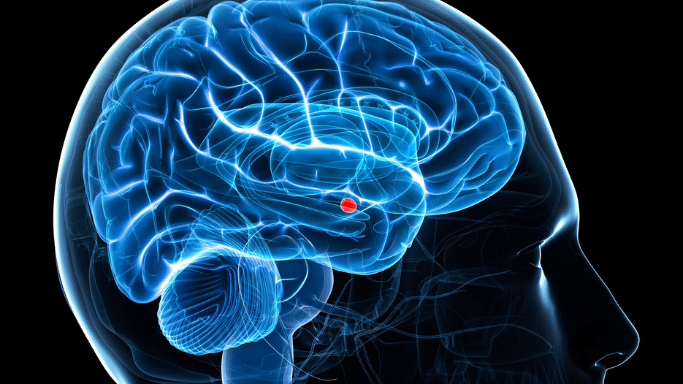
The critical brain regions involved in this process are the area postrema (AP) and the nucleus of the solitary tract (NTS) in the brainstem.
The area postrema is one of a handful of circumventricular organs — brain regions that lack the blood-brain barrier’s tight junctions — allowing circulating peptides to directly activate neurons.
This is why a peripherally injected peptide can produce powerful central appetite suppression, and in our case the AP is anatomically designed to detect circulating satiety signals.
From the AP, the signal propagates to the lateral parabrachial nucleus (LPBN), the central amygdala, and hypothalamic feeding centers… creating a distributed neural network that promotes satiation, delays gastric emptying, and reduces food intake.
Research published has confirmed Cagrilintide’s body weight-lowering effects specifically depend on the presence of AMY1R and AMY3R.
When these receptor subtypes are knocked out in mice, Cagrilintide loses its efficacy.
How This Differs from GLP-1 Agonists
This is a fundamentally different mechanism from GLP-1 receptor agonists like Semaglutide, Tirzepatide, or Retatrutide.
GLP-1 receptor agonists target GLP-1 receptors (and in the case of Tirzepatide, GIP receptors as well; Retatrutide targets glucagon receptors on top of the GLP-1 and GIP receptors).
Amylin agonists target a completely different receptor family through a completely different brain pathway.
This is why combining Cagrilintide with a GLP-1 agonist (as Novo Nordisk is doing with CagriSema, a dual therapy consisting of Cagrilintide + Semaglutide) produces additive effects.
Effectively, you’re activating two independent satiety systems simultaneously.
For men who have already explored GLP-1 agonists and reached a plateau with respect to appetite and/or fat loss, or who want to tap into two complementary mechanisms at the same itme, this distinction matters enormously.

A Word of Caution: Appetite Over-Suppression
As I mentioned in the introduction of this article, Cagrilintide is STRONG in its ability reduce appetite.
And not in a “I feel a little less hungry” way.
I’m talking about complete appetite shutdown to the point where you have zero desire to eat.
Here’s where this becomes a double-edged sword…
If you’re an optimized man doing resistance training, maintaining muscle mass, and eating a sufficient amount of protein, having your appetite obliterated is NOT a good thing.
You MUST eat to preserve muscle, which means you MUST hit your protein targets.
If Cagrilintide makes food repulsive to you, you’ll undereat, lose lean tissue, and end up being skinny-fat instead of lean and muscular.
This is the same issue we see with aggressive GLP-1 peptide dosing.
And the issue is arguably MORE pronounced with Cagrilintide because it hits the amylin pathway’s brainstem satiety centers so directly.
So start with a conservative dose, and titrate up slowly but ONLY if you don’t get an adequate level of appetite suppression.
If appetite disappears completely, LOWER the dose!
The goal we want to achieve here is appetite modulation, not total appetite elimination.

Sex Differences in Amylin Signaling: What the Research Shows
Now let me address the sex-specific question because the data IS out there if you know where to look.
The trials investigating Cagrilintide don’t break down the results by sex, but the amylin pathway research does show meaningful sex differences.
Research using resting-state fMRI in awake rats demonstrated amylin and GLP-1 produce sex-divergent effects on brain activity and functional connectivity patterns.
Most importantly, correlation analysis between connectivity and feeding behavior reveals different brain areas potentially drive reduced food intake in male versus female subjects.
In other words: Amylin suppresses appetite in both sexes, but the neural circuitry it uses to do so differs between males and females.
One study found loss of calcitonin receptor signaling in POMC neurons led to increased body weight, adiposity, and glucose intolerance specifically in male knockout mice.
This was driven by decreased energy expenditure and reduced brown adipose tissue UCP1 expression.
Female mice did NOT show the same metabolic phenotype.
The researchers explicitly concluded these results “demonstrate the need for sex-specific approaches in obesity research and potentially treatment.”
Additionally, the hypothalamic POMC system — a key node in amylin’s signaling network — has been shown to differ between sexes, with testosterone exposure influencing POMC neuron number and activity.
And estradiol-deficient female rats show enhanced responses to chronic amylin use for lowering body weight and increasing energy expenditure.
VTA amylin receptor signaling research confirms amylin pathway activation suppresses feeding and body weight in female rats through the same receptor system ( thusconfirming the pathway works in both sexes), but the specific neural dynamics differ.
What does this all mean, practically speaking?
Cagrilintide almost certainly works differently in men versus women at the neural circuit level, even though it activates the same receptors.
Men may experience different appetite suppression patterns, different energy expenditure responses, and different side effect profiles than women.
This is EXACTLY the kind of data the Phase 3 trials should be reporting by sex, but they aren’t (not yet).

The Fat Loss Benefits: What the Trials Actually Show
In the REDEFINE 1 Phase 3 trial, adults with obesity or overweight who received 2.4 mg of Cagrilintide once weekly lost an average of 11.8% of their body weight after 68 weeks, compared to just 2.3% in the placebo group.
Even more striking was 31.6% of Cagrilintide-using recipients achieving a weight loss of greater than 15%, versus only 4.7% for placebo-using recipients.
These are legitimate results, but context matters: These trials enrolled people who were obese or overweight, not optimized men looking to go from 15% body fat to 10%.
For comparison, Retatrutide — the triple GLP-1/GIP/glucagon agonist — produced up to 24% body weight reduction in its Phase 2 trial for obesity within 48 weeks, with women losing more than men (28.5% vs 21.9%).
Cagrilintide’s real promise may be its use in COMBINATION with GLP-1 agonists (as observed in the CagriSema trials), where you get additive effects from hitting both the amylin and GLP-1 pathways simultaneously.

Cagrilintide Dosing: What We Know
The Phase 3 SCALE trials evaluated Cagrilintide at a single maintenance dose of 2.4 mg injected subcutaneously once a week.
What the research doesn’t address, at least not yet, is how men should actually approach titration based on lean body mass, metabolic baseline, or training goals.
There’s no published dose-response curve for men specifically.
No guidance on adjusting for body recomposition versus pure weight loss.
No data on whether men already running an optimized hormone protocol respond differently than the average sedentary trial participant.
What I’ve seen in our community is this: 2.4 mg is aggressive for men who are already relatively lean and metabolically healthy.
The appetite suppression at the clinical dose can be severe enough to interfere with recovery nutrition, training output, and libido.
So as I said before: Start lower, titrate slowly and only when necessary, and track your fat mass and lean mass in addition to scale weight.
Cagrilintide Dosing Chart
| Phase | Timeline | Weekly Dose | Notes |
| Initiation | Weeks 1–2 | 0.3 mg | Establish baseline tolerance. Monitor appetite, energy, and gastrointestinal response. |
| Titration 1 | Weeks 3–4 | 0.6 mg | Gradual uptitration. Note changes in training performance and recovery appetite. |
| Titration 2 | Weeks 5–8 | 1.2 mg | Hunger suppression becomes pronounced. Prioritize protein targets. Track libido and mood. |
| Titration 3 | Weeks 9–12 | 1.8 mg | Monitor closely. Lean men may find this dose sufficient. Adjust if training output drops. |
| Maintenance | Week 13+ | 2.4 mg | Full clinical dose from Phase 3 trials. Not required for all men. Hold at 1.8 mg if response is adequate. |
If you’re using Cagrilintide for body recomposition rather than obesity treatment, slower titration is the smarter play.
The goal is controlled fat loss while holding the muscle you’ve built, rather than 100% suppression of appetite.
Many men in my community find 1.2–1.8 mg is the performance sweet spot.
You get meaningful fat loss without the cognitive fog or the zero-hunger problem that wrecks training performance.
Reaching 2.4 mg should be seen as the ceiling only required for a select few individuals, rather than a blanket requirement.
Always rack appetite, energy, mood, libido, and gym output at every phase of dose titration.
If any of those markers drop sharply when you increase the dose, attempt to hold your current dose for another two to four weeks before making the decision to titrate up.

Side Effects of Cagrilintide to Watch For
The published Phase 3 results state Cagrilintide “appears well tolerated” and describe which side effects occurred, at what frequency, or and how severe they were in great detail.
Based on the amylin analogue class and what we know from Pramlintide (the first-generation amylin analogue approved for diabetes), common side effects are likely to include nausea, GI distress, and injection site reactions — similar to other satiety-modulating peptides.
The appetite over-suppression I described above is arguably the most significant practical concern for optimized men.
It’s not a “side effect” in the traditional sense, but it’s a real risk that can undermine your body composition goals if it isn’t managed carefully.
We have only anecdotal data with regard to Cagrilintide’s interactions with exogenous testosterone, growth hormone, and other compounds men in my community commonly use.

Safety Gaps and What’s Still Missing
Beyond the male-specific data gap, here are the critical unknowns:
- No long-term data beyond 68 weeks: What happens after two years? Does the weight stay off upon terminating use? Do side effects emerge or worsen?
- No body recomposition studies: All the existing trials focus on obese populations losing weight, not optimized men seeking to drop stubborn fat while preserving muscle.
- No interaction data: How does cagrilintide affect or interact with testosterone replacement therapy, growth hormone, thyroid optimization, or other peptides?
- No head-to-head comparisons with Tirzepatide or Retatrutide as standalone agents.
The bottom line is this: Do your homework and understand what you’re getting yourself into.

What This Means for You
If you’re considering Cagrilintide, here’s my take after 30+ years of thriving in the fat loss space:
The fat loss data is real and significant, especially for men dealing with obesity who haven’t achieved results through diet, training, and foundational hormone optimization.
The mechanism is now well understood: Cagrilintide binds AMY1R, AMY2R, AMY3R, and CTR in the brain — the same receptors endogenous amylin uses — activating Gs-coupled cAMP signaling in brainstem satiety centers to suppress appetite, delay gastric emptying, and reduce food intake.
The sex-specific amylin research confirms male and female brains process amylin signals differently at the neural circuit level, which means the one-size-fits-all trial data has real limitations for men.
If you choose to move forward with Cagrilintide:
- Start with a low dose and titrate up based on your individual response.
- Monitor body composition in addition to scale weight
- Track appetite, energy, libido, mood, and training performance closely.
- Maintain protein intake even when appetite is suppressed, as it is non-negotiable for muscle preservation.
- Work with a knowledgeable clinician who understands peptides and hormone optimization.
Don’t assume Cagrilintide is a magic bullet.
Like the GLP-1 peptides, it is a tool that only works in the context of a dialed-in lifestyle.
Sourcing
As with all peptides, quality and purity make the difference between results and expensive disappointment.
BioLongevity Labs carries Cagrilintide and is the industry benchmark for USA-manufactured, third-party-tested research peptides.
If you’re going to experiment with this compound, source it from somewhere you can trust.
Use code JAYC at checkout for 15% off.
Do NOT buy Cagrilintide from random websites or overseas suppliers!
The peptide market is full of underdosed, contaminated, and counterfeit products.

The Bottom Line
Cagrilintide shows legitimate promise as a fat loss tool, with Phase 3 data showing an average 11.8% body weight reduction and nearly one-third of users losing 15% or more.
The mechanism is clear: It’s a long-acting amylin analogue that binds amylin and calcitonin receptors in the brain, activating the same satiety pathways as your endogenous amylin but with dramatically extended duration.
However, the current evidence base has real gaps: No male-specific outcomes, and no long-term safety data beyond 68 weeks.
The sex-specific amylin research tells us male and female brains respond to amylin pathway activation through different neural circuits — which means the mixed-population trial data doesn’t tell the whole story for men.
And from personal experience, this compound is highly potent.
Start at a low dose and don’t let it obliterate your appetite to the point where you can’t fuel your training and maintain muscle mass.
Isn’t It Time You Became Fully Optimized to Live Longer and Stronger?
Join my #1 online membership group, Fully Optimized Health to receive guidance from me and an elite group of more than 800 male and female biohackers (who all started out just like you)
And don’t forget to check out our other premium educational content dedicated to helping you fully optimize your health:
Quantum Peptides – the A-to-Z system for anyone (newbies & pros alike) desiring to master peptide use for the first time and forever.
Quantum Testosterone – the A-to-Z system for Men & Women to learn to optimize their hormones for explosive energy, lean muscle, and timeless vitality.
The Ultimate GLP-1 Video Masterclass – how to PROPERLY utilize the world’s most powerful weight loss drugs for enhanced fat loss and overall longevity.
The Modern Woman’s Peptide Course – a must-have resource for any woman seeking to become more feminine, sexier, leaner, and healthier through the use of peptides.
Life Enhanced – Unlock the secrets to TOTAL Mind-Body-Spirit Optimization as Hunter Williams and I teach you how to live at the tip of the spear.
30 Days 2 Shredz – Reprogram Your Mind and Body for Maximum Fat Loss in Minimum Time with our Optimized Fasting Protocol
Monica Campbell’s 3 Day PMF Video Training Program – Ignite unbreakable strength, sculpt lean muscle, and conquer workouts fearlessly with my wife Monica’s 3 Day Video training course.
Positive Muscle Failure Video Training Program – Learn how to lift weights correctly for maximum muscle in minimum time while building the physique of your dreams.
See you on the inside!